 Knowledge Center
Machine Comparison
Flexo vs Inkjet Label Printing Machine
Flexo printing is usually better for repeated medium and high-volume runs, while inkjet suits short runs, variable data and fast artwork changes.
Quick Answer
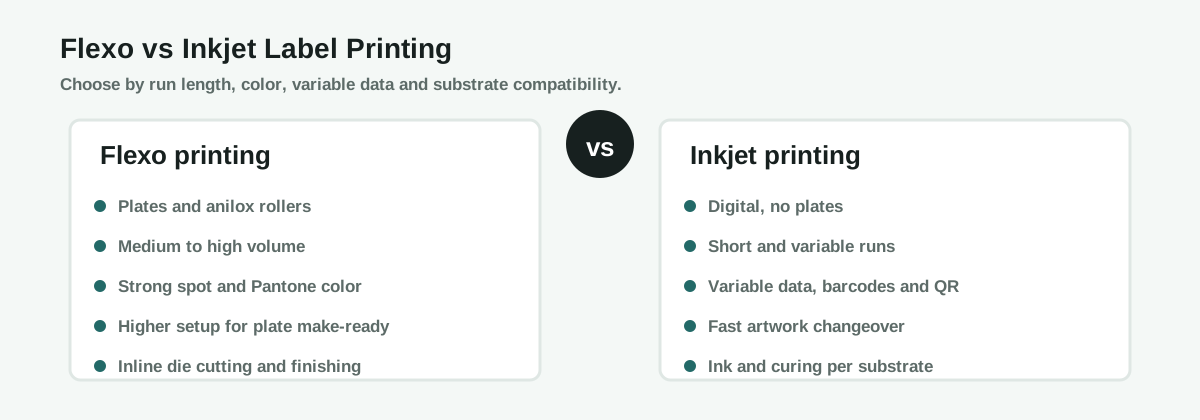
Flexo printing uses flexible plates and anilox rollers to print fixed artwork at high speed, so it is usually better for repeated label jobs at medium and high volume. Inkjet printing applies digital ink directly from a printhead, so it needs no plates and suits short runs, variable data and frequent artwork changes.
Choose by production volume, color requirements, whether you need variable data, setup cost and which substrates you print. Many label factories run both methods for different job types rather than replacing one with the other.
How Flexo Printing Works
A flexo press prints roll labels with flexible polymer plates mounted on plate cylinders. Ink is transferred by an anilox roller with a controlled cell pattern, then onto the plate and the substrate. Each color needs its own plate and station, so artwork is fixed until plates are changed.
Flexo is strong for solid colors, spot colors, Pantone matching and inline finishing such as die cutting, lamination, slitting and rewinding in one pass. It is the common choice for stable medium and high-volume label production.
How Inkjet Printing Works
An inkjet machine for labels prints digital images directly from a printhead onto roll label material, without plates. The image comes from a digital file, so artwork can change between jobs without make-ready plates.
Inkjet is strong for short runs, personalization, variable data such as serial numbers and QR codes, and fast job changes. Print quality depends on ink chemistry, substrate coating, resolution and drying or curing.
Flexo vs Inkjet Comparison
The best choice follows the job mix. A factory with long repeated orders and spot colors leans flexo; a shop with many short jobs and variable data leans inkjet.
Flexo vs Inkjet Selection Flow
Key Buying Factors
- Run length: long repeated orders favor flexo; short and changing orders favor inkjet.
- Color: spot and Pantone color favor flexo; variable full-color work favors inkjet.
- Variable data: serial numbers, barcodes and QR codes favor inkjet.
- Setup cost: plates and make-ready add cost to flexo; ink is a running cost for inkjet.
- Substrate: confirm ink adhesion and coating for both methods on your real material.
- Finishing workflow: confirm die cutting, slitting and rewinding for either printing method.
FAQ
Should I replace flexo with inkjet?
Usually no. Flexo remains more economical for long stable runs and spot colors, while inkjet fits short runs and variable data. Many factories use both.
Which is better for barcode and QR labels?
Inkjet handles variable barcode and QR data directly. Flexo can print fixed codes and add variable data with a separate coding or numbering option.
Which has lower setup cost?
Inkjet has no plates, so setup is faster and cheaper for short jobs. Flexo plates and make-ready are justified by longer runs.
Which prints faster?
Flexo usually prints faster on long stable runs, while inkjet speed depends on resolution, ink curing and the complexity of the artwork.
What information should I send before asking for a quotation?
Send label material, run length, color count, whether you need variable data, web width, and required production speed.
Ask an Engineer
Not sure whether flexo or inkjet fits your label jobs?
Send us your label material, run length, color count, variable data needs and web width. MWELLPACK can recommend which printing method fits your real production.
Related Articles
Related Machines
Flexo Printing Machine
Roll label printing with plates, anilox rollers and inline finishing.
View machine guideInkjet Machine for Labels
Digital label printing for short runs and variable data.
View machine guideDigital Label Finishing Machine
Finishes digitally printed rolls with die cutting, slitting and rewinding.
View machine guide