Product Knowledge
Automatic Roll Change Machine Guide
An automatic roll change machine connects a new roll to the running web so printing, coating or finishing lines can continue with less downtime and less waste.
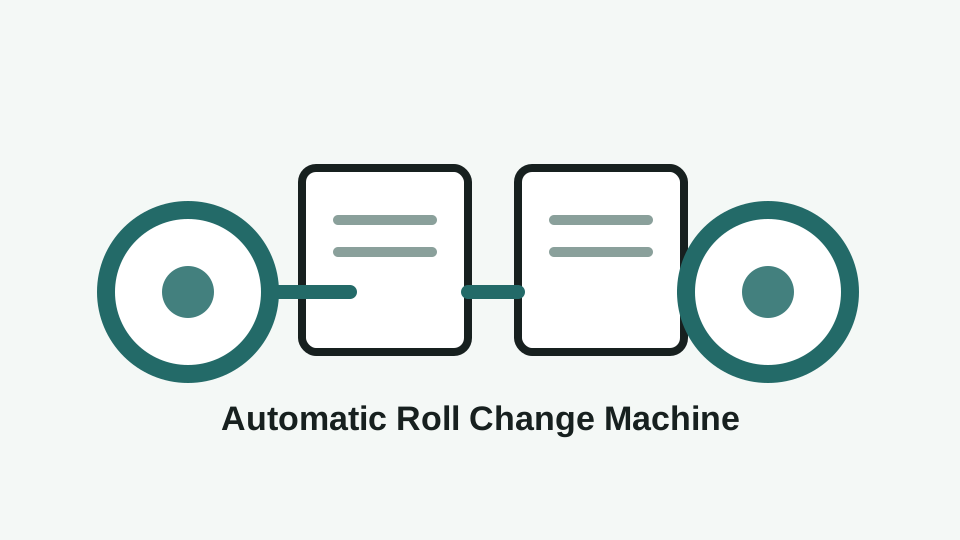
What Is This Machine?
An automatic roll change machine connects a new roll to the running web so printing, coating or finishing lines can continue with less downtime and less waste. It is selected as part of a complete label making process, not as an isolated machine. Buyers should review the incoming material, roll size, desired finished roll format and quality control requirements before choosing a configuration.
How Does It Work?
The web is unwound under controlled tension, guided through the working stations and rewound after processing. Depending on the machine, the process may include printing, die cutting, lamination, inspection, slitting, waste removal, counting or automatic roll change. Stable tension and accurate web guiding are usually more important than catalogue speed.
When Do You Need This Machine?
You need a automatic roll change machine when your current workflow cannot reach the required roll quality, changeover speed, cutting accuracy or production volume. It is also useful when buyers request consistent roll diameter, clean edges, exact label count or better inspection records.
What Materials Can It Process?
Typical materials include paper label rolls, film rolls, flexible packaging materials, release liner, adhesive label stock and compatible web materials. Always test real rolls when the material is very thin, stretchy, highly adhesive, static-sensitive or surface-treated.
Key Technical Points to Check Before Buying
- Maximum roll diameter and roll weight
- Splice method and tape compatibility
- Web speed during roll change
- Tension control during acceleration
- Integration with existing printing or finishing line
Common Machine Configurations
- Automatic unwinder
- Turret roll changer
- Flying splice system
- Accumulator-assisted roll change
- Automatic web tension package
Technical Specifications
Typical Applications
- long-run label printing
- coating lines
- high-volume rewinding
- continuous roll-to-roll production
Common Problems and Solutions
Common issues include web wandering, unstable tension, poor rewinding, inaccurate registration, adhesive buildup or waste matrix breaks. Most problems can be reduced by matching blade type, die cutting pressure, web guide position, tension range and roll hardness to the actual material.
FAQ
What information should I send before asking for a quote?
Send material type, thickness, roll width, maximum roll diameter, label size, production speed target and sample photos or videos.
Should I choose the fastest model?
Not always. Choose a machine that can run your material stably at the speed your operators can maintain with acceptable waste.
Get Machine Recommendation
Need help matching a machine to your label job?
Not sure which machine fits your label production? Send us your material type, roll width, roll diameter, label size and required production speed. Our engineer will recommend a suitable machine configuration.
Related Articles
Related Machines
Inspection Slitter Rewinder
Learn where this machine fits in label printing, die cutting or finishing workflows.
View machine guideDigital Label Finishing Machine
Learn where this machine fits in label printing, die cutting or finishing workflows.
View machine guideRotary Die Cutting Machine
Learn where this machine fits in label printing, die cutting or finishing workflows.
View machine guideFlatbed Die Cutting Machine
Learn where this machine fits in label printing, die cutting or finishing workflows.
View machine guide