 Knowledge Center
Technical Sharing
Why Labels Lift During Matrix Stripping
Matrix stripping pulls the waste around the labels, and when the kiss cut, angle or material is wrong, it lifts finished labels or damages the liner.
Quick Answer
Matrix stripping is the step that pulls the waste skeleton away from the die-cut labels. Problems fall into two groups: the waste carries labels with it, or the waste breaks and stops the line. Both usually trace back to kiss-cut depth, stripping angle, or the material combination of adhesive, release liner and temperature.
The Main Problems
Material Analysis
- Adhesive: soft or stringy adhesive transfers to the waste and lifts labels; firm adhesive releases more cleanly.
- Release liner: release force and liner strength set the kiss-cut window and how easily labels stay on the liner.
- Face material: thin or stretchy face lifts more easily than stiff paper or film.
- Temperature: heat softens adhesive and makes labels lift and waste string.
Root-Cause Principle
Kiss cut, stripping angle and pull window
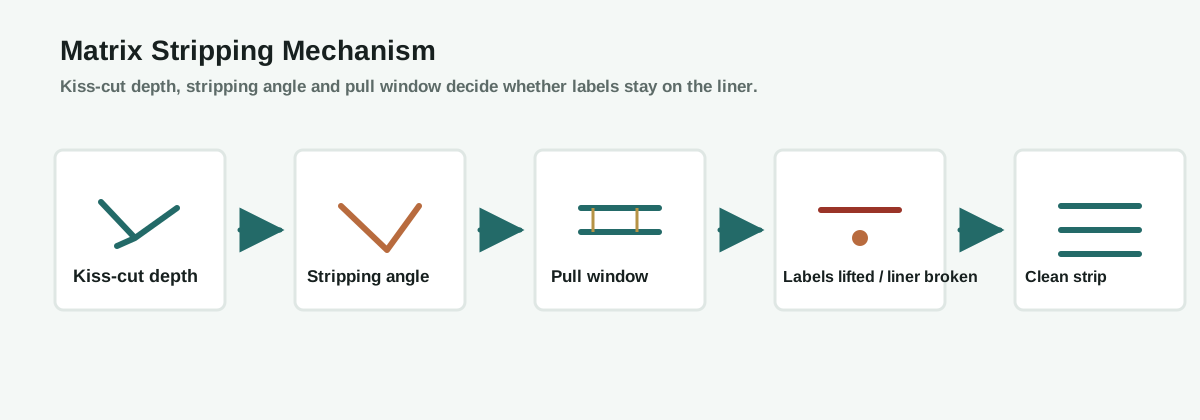
Matrix stripping works when the die cuts cleanly through the face and adhesive but stops at the liner, and when the waste is pulled at an angle that peels it away without disturbing the labels. The window between these two is narrow.
If the kiss cut is too shallow, the labels stay connected to the waste and lift away. If it is too deep, the liner is cut and snaps under the pull. A wrong stripping angle drags the waste across the labels, while a weak waste skeleton, soft adhesive or warm liner lets the whole process fail.
Single-Variable Troubleshooting Flow
Change only one factor at a time and record the result, so you know which change fixed the problem.
- Check the die: confirm it cuts through face and adhesive without scoring the liner.
- Check kiss-cut depth: peel a sample and hold the liner to light to confirm no strike-through.
- Adjust the stripping angle and pull window to the gentlest angle that still separates the waste.
- Confirm the waste skeleton is strong enough: widen borders or adjust the layout if it tears.
- Confirm adhesive, liner and temperature, then re-run and compare.
Matrix Stripping Mechanism
Solutions
Measuring Your Fix Rate
Track each job with a simple record: material, adhesive, liner, die condition, stripping angle, speed and whether the run passed. After enough jobs, you can see which factor most often causes failures and fix it before the next run instead of during it.
FAQ
Why do labels lift with the waste matrix?
Usually the kiss cut is too shallow so the label is still connected to the waste, or the adhesive strings and pulls the label up.
How do I know if the die cuts the liner?
Hold the liner up to light after peeling a label. Visible cut lines mean the die is striking through the liner.
What stripping angle should I use?
Use the gentlest angle that still separates the waste, then adjust by one variable at a time.
Why does the waste matrix keep breaking?
The waste skeleton is too weak for the layout, or the stripping path and speed put too much stress on it.
What information should I send before asking for help?
Send the face, adhesive and liner, the die condition, stripping angle, speed and where exactly the problem happens.
Ask an Engineer
Still fighting matrix stripping problems on your die-cut labels?
Send us your face, adhesive and liner, die condition and stripping angle. MWELLPACK can help you find the correct kiss-cut and stripping window.
Related Articles
Related Machines
Rotary Die Cutting Machine
Kiss cuts labels where die depth controls the stripping window.
View machine guideFlatbed Die Cutting Machine
Die cuts thicker and specialty materials with high cutting pressure.
View machine guideDigital Label Finishing Machine
Finishes labels with die cutting and matrix removal in one workflow.
View machine guide