 Knowledge Center
Application Guide
Food and Beverage Label Production Guide
Food and beverage labels must survive moisture, cold and handling while staying readable and attractive, so material, printing and finishing all matter.
Quick Answer
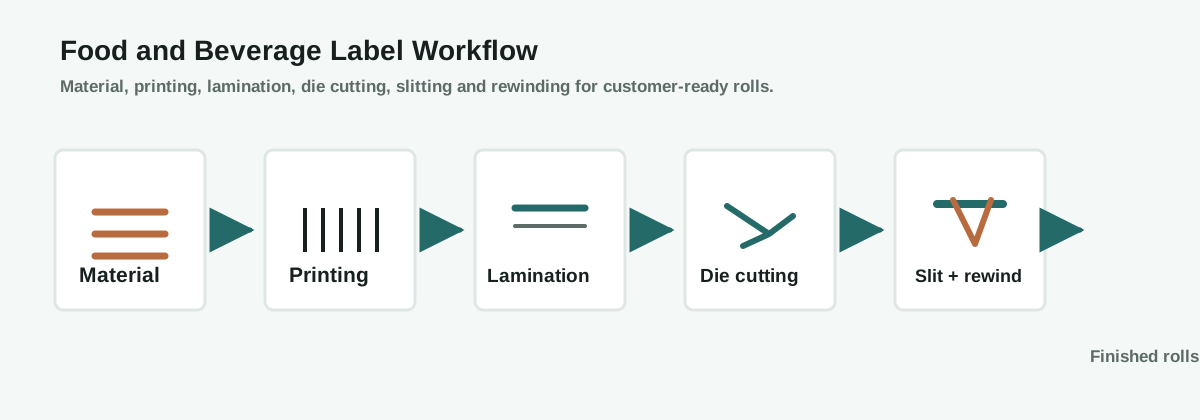
Food and beverage labels cover bottles, jars, cans and flexible packaging. They are usually printed on film or coated paper, then laminated, die cut, slit and rewound for automatic labeling lines. The key requirements are moisture and condensation resistance, durable adhesion, readable print and clean finished rolls.
Compared with a simple sticker, a beverage label often needs a film face, a strong adhesive that resists cold and moisture, and a lamination or varnish to protect the print. The workflow must keep the label looking good and feeding smoothly on high-speed filling lines.
Materials for Food and Beverage Labels
Film labels such as PP, PE and PET resist moisture and are common for beverages, while coated paper is common for dry food, jars and cans. The adhesive must suit the container surface and the temperature, and the liner must release cleanly for automatic application.
Confirm the material with real tests for condensation, cold storage and the container surface, because a label that looks fine at room temperature may peel in a cold or wet environment.
Printing Method
Flexo printing suits medium and high-volume food and beverage labels with solid, consistent colors and spot colors. Digital and inkjet printing suit shorter runs, seasonal products and variable data such as batch codes and QR codes.
Many food labels also need a clear or matte lamination or varnish to protect the print from moisture and scuffing, which is applied inline or as a finishing step.
Finishing Workflow
After printing, the label web is laminated, die cut to shape, and the waste matrix is removed. The roll is then slit into finished widths and rewound onto cores that match the customer's labeling machine.
Accurate die cutting and clean matrix removal matter because food and beverage labels often have rounded shapes and tight borders. Stable tension keeps the film from stretching and the die cut in register.
Food and Beverage Label Workflow
Machine Selection Checklist
- Material: film or coated paper, confirmed for moisture and cold
- Adhesive: suited to the container and temperature
- Printing: flexo for volume, digital or inkjet for short and variable runs
- Lamination or varnish for print protection
- Die cutting and clean matrix removal
- Slitting and rewinding for the customer's applicator
Common Problems and Fixes
FAQ
Should I use film or paper for beverage labels?
Film labels resist moisture and condensation, so they are common for cold and wet beverages, while coated paper suits many dry food, jar and can labels.
Why do food labels need lamination or varnish?
Lamination or varnish protects the print from moisture, condensation and scuffing during filling, transport and display.
Which printing method fits food labels?
Flexo suits medium and high-volume labels with spot colors, while digital and inkjet suit short runs, seasonal products and variable data.
What roll diameter should the finished label roll be?
Match the finished roll diameter and core size to the customer's automatic labeling machine so it feeds without stopping.
What information should I send before asking for a quotation?
Send the container type, material, adhesive needs, printing method, web width, label shape and required roll specifications.
Ask an Engineer
Need a complete food and beverage label production setup?
Send us your container type, material, adhesive needs, printing method and label shape. MWELLPACK can recommend a practical production workflow.
Related Articles
Related Machines
Flexo Printing Machine
Prints food and beverage labels at medium and high volume.
View machine guideDigital Label Finishing Machine
Finishes labels with lamination, die cutting, slitting and rewinding.
View machine guideInspection Slitter Rewinder
Inspects and converts finished food and beverage label rolls.
View machine guide