 Knowledge Center
Machine Guide
Label Roll Width and Diameter Guide
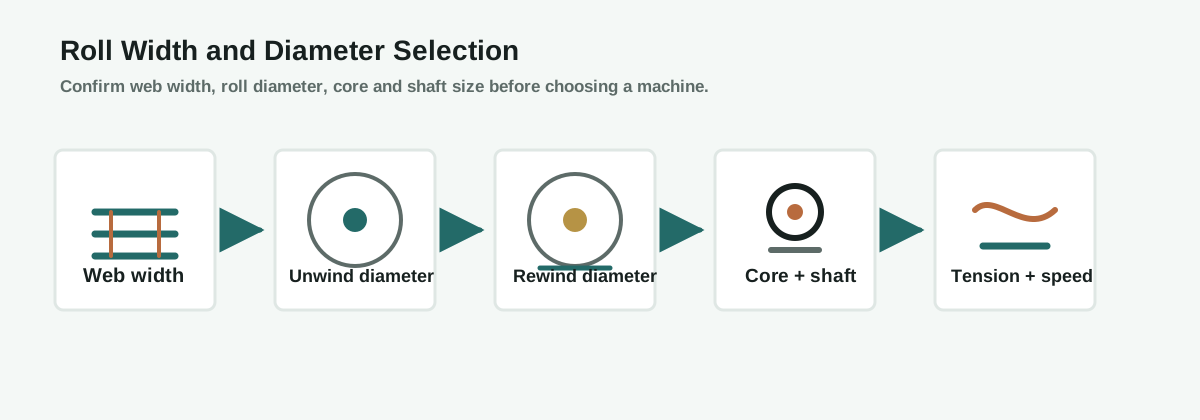
Confirm web width, unwind and rewind diameter, core size and shaft type before choosing a machine, because these values set the physical limits of your whole line.
Quick Answer
Label roll width and roll diameter decide three physical limits on a machine: how wide the web can be, how large the input roll can be, and how large the finished roll can be. Web width is set by the printing and converting width, while roll diameter is set by the mother roll you receive and the finished roll your customer can run. Core size and shaft type connect these rolls to the machine.
Choosing these values correctly avoids machines that cannot load the roll, cannot reach the required speed, or rewind rolls that are too loose, too tight or the wrong diameter for downstream equipment.
Web Width: What It Controls
Web width is the maximum material width a machine can process. It must cover the printed mother roll width plus room for web guiding movement and any lane layout across the web. A machine that is too narrow cannot load the job; a machine that is much wider than the job may still run, but tension and guiding are harder to control on narrow materials.
For many sticker, barcode and self-adhesive label jobs, common material widths are within 570 mm. Buyers should still confirm the actual maximum web width against the printing machine width, the mother roll width and the planned lane layout.
Do not assume all label material is within 570 mm. Packaging labels, multi-lane jobs and special converting work can require wider machines, so always confirm the real maximum web width.
Roll Diameter: Unwind and Rewind
Unwind roll diameter sets how large the input mother roll can be. A larger unwind diameter means fewer roll changes and less downtime, but it also adds weight, so the unwind shaft, brakes and tension system must support it.
Rewind roll diameter sets how large the finished roll can be. This should match what your customer's applicator, barcode printer or packaging line can accept, because a finished roll that is too large may not fit their equipment.
Core Size and Shaft Type
The core is the cardboard or plastic tube the label material is wound on. Core size must match the machine shaft and the finished roll the customer uses. A wrong core size creates loose rolls, slipping cores or rolls that cannot be loaded.
The shaft type matters for how the roll is gripped and driven. Air shafts expand to lock the core and are common for label converting. Differential shafts let multiple rolls on one shaft slip independently, which helps when lanes have slightly different thickness or tension.
Tension Control and Production Speed
Roll width and diameter directly affect tension control. A wide, heavy roll needs more torque at the unwind, while a narrow roll needs finer tension to avoid stretching. As the roll diameter changes from full to empty, taper tension keeps the web stable so the roll winds evenly from start to finish.
Production speed is also limited by roll diameter and tension stability. A machine can only run as fast as it can unwind and rewind without the web wandering, the roll telescoping or the tension oscillating. Confirm the stable production speed for your real roll size, not only the maximum mechanical speed.
Roll Width and Diameter Selection Flow
Buying Checklist
- Maximum web width
- Unwind roll diameter and roll weight
- Rewind roll diameter
- Core diameter
- Shaft type and required grip
- Finished roll width range
- Stable production speed for your real roll size
- Material type: paper, film or thermal stock
- Future order mix and capacity plan
Common Mistakes
FAQ
Why does roll diameter affect machine selection?
Roll diameter sets the physical unwind and rewind capacity, the roll weight the shaft must support and how tension changes as the roll empties and fills.
What core size should I use?
Match the core size to the machine shaft and the customer's downstream equipment. Common sizes include 25 mm, 40 mm, 50 mm, 76 mm and 3 inch.
What is the difference between air shaft and differential shaft?
Air shafts expand to lock cores and are common for single rolls. Differential shafts let multiple rolls on one shaft slip independently for multi-lane winding.
Is 570 mm web width enough for my labels?
For many sticker, barcode and self-adhesive jobs it is. Still confirm the printing width, mother roll width and lane layout, because some packaging and multi-lane jobs need more width.
What information should I send before asking for a quotation?
Send material type, maximum web width, unwind and rewind roll diameter, core size, finished roll width, required speed and future capacity plan.
Ask an Engineer
Not sure which roll width and diameter your machine should support?
Send us your material type, maximum web width, unwind and rewind roll diameter, core size and finished roll width. MWELLPACK can recommend a practical configuration.
Related Articles
Related Machines
Inspection Slitter Rewinder
Converts wide mother rolls into finished rolls with controlled tension and diameter.
View machine guideRotary Die Cutting Machine
Die cuts roll labels where web width and repeat length set the machine limits.
View machine guideFlexo Printing Machine
Prints roll labels where printing width and repeat length affect material handling.
View machine guide