 Knowledge Center
Machine Guide
How to Choose a Label Slitting Machine for Sticker Rolls
A practical guide for sticker label producers comparing web width, roll diameter, blades, tension control, web guiding, speed and rewinding quality before buying a label slitting machine.
Quick Answer
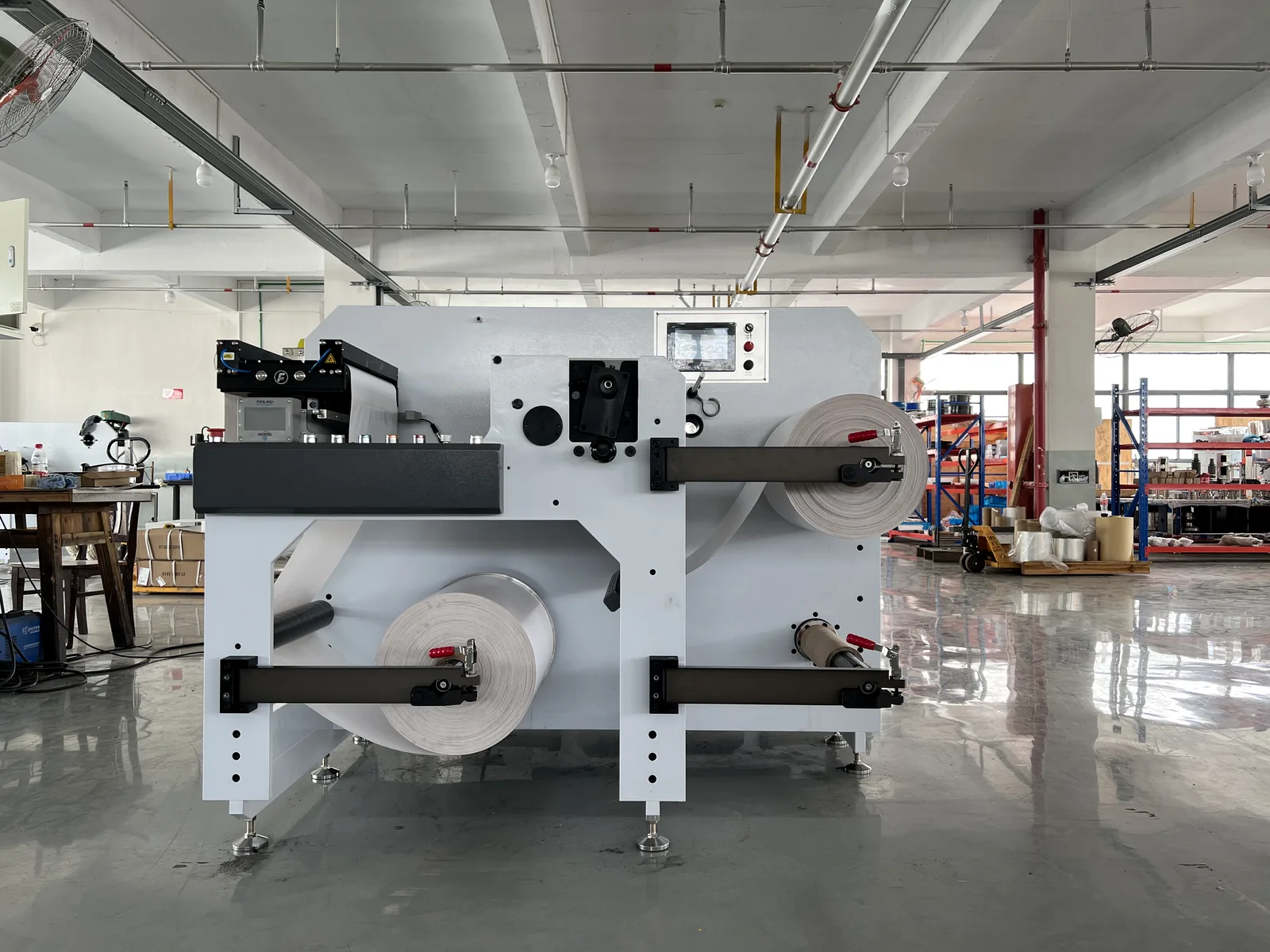
To choose a label slitting machine for sticker rolls, start with real production data: material type, maximum web width, finished roll width, roll diameter, required speed, slitting accuracy, rewinding quality and whether you need inspection before rewinding. The right machine should match your label material, core diameter, tension requirement, web guiding accuracy and future capacity.
For many sticker label and self-adhesive label applications, material widths are commonly within 570mm, but buyers should still confirm actual roll width and future capacity. The machine configuration should follow the production workflow.
Who This Guide Is For
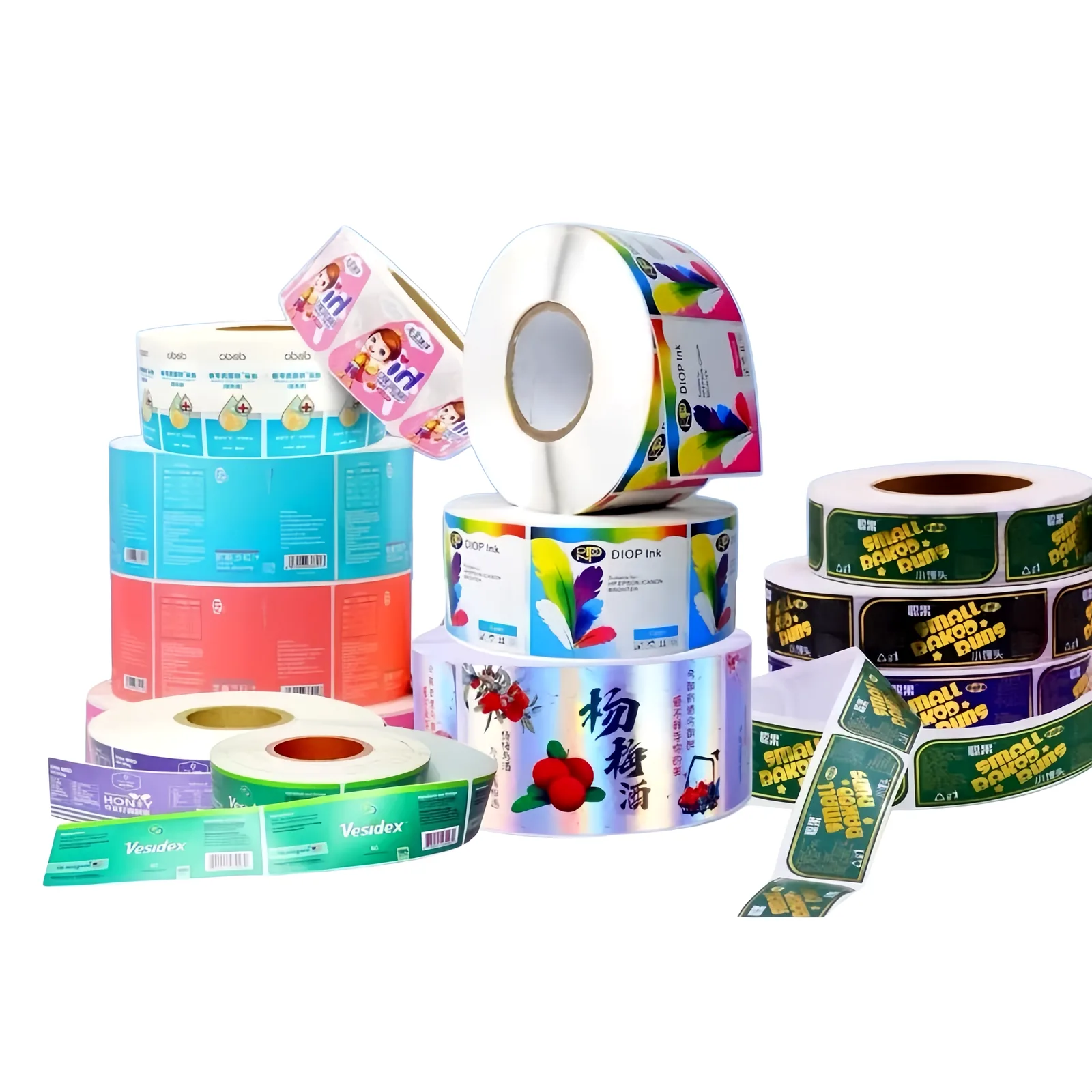
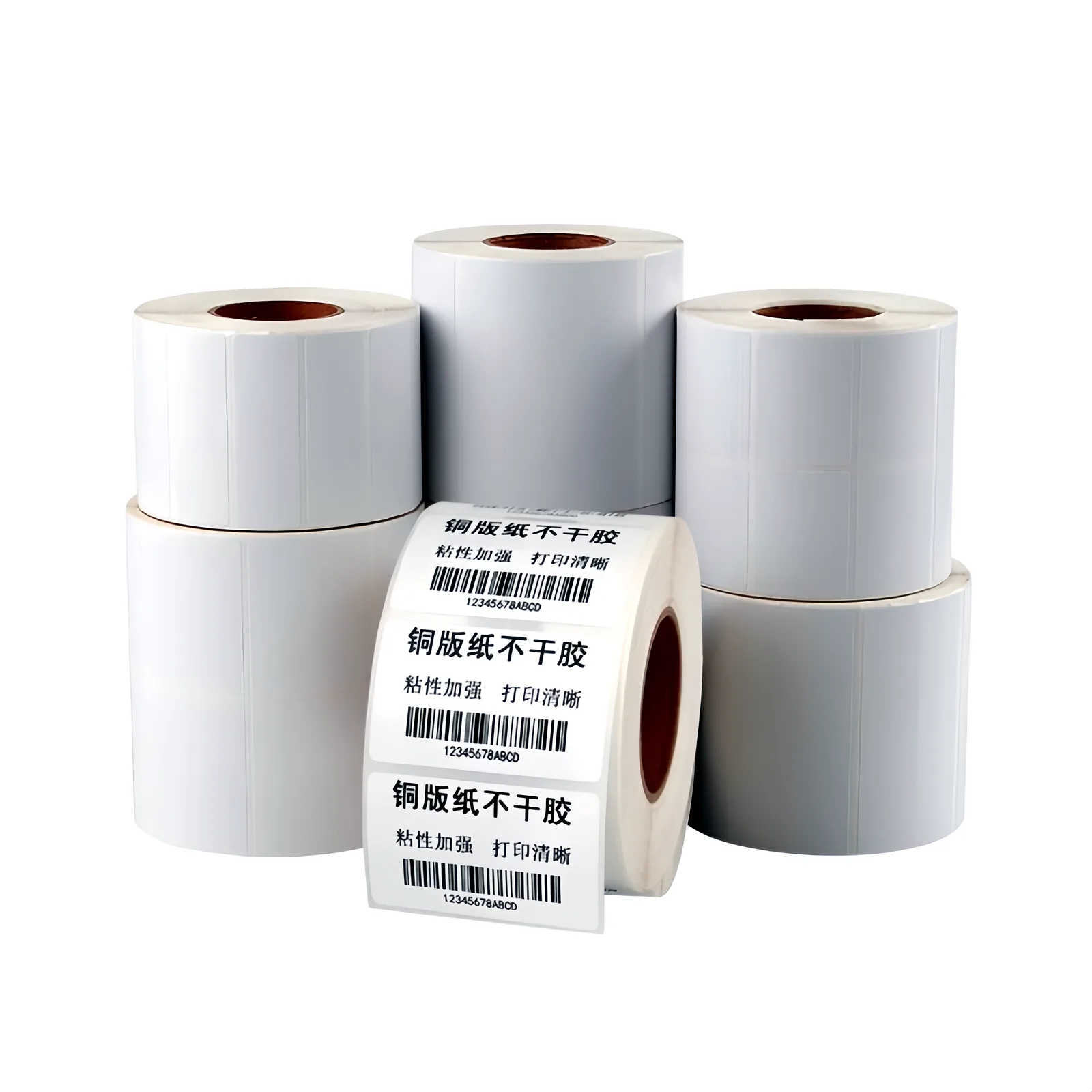
This guide is for sticker label manufacturers, barcode label producers, packaging label converters, digital label shops and roll-to-roll factories that slit printed or blank label rolls into finished sizes.
It is especially useful if you are comparing a basic slitter rewinder, an inspection slitter rewinder, a high speed label slitting rewinding machine or a digital label finishing line. If your factory produces sticker labels, logistics labels, barcode labels, cosmetic labels or packaging labels, the slitting stage directly affects finished roll appearance and delivery quality.
What Sticker Roll Slitting Requires
Sticker roll slitting sounds simple: cut a wider roll into narrower rolls and rewind them. In real production, the process is more sensitive than it looks.
Self-adhesive label material usually includes a face stock, adhesive and release liner. During slitting, the blade must cut cleanly without pulling the material, damaging the liner, causing adhesive buildup or creating rough edges. After slitting, each finished roll must rewind evenly with stable tension. If tension is wrong, rolls may telescope, deform or create feeding problems in the customer's labeling machine.
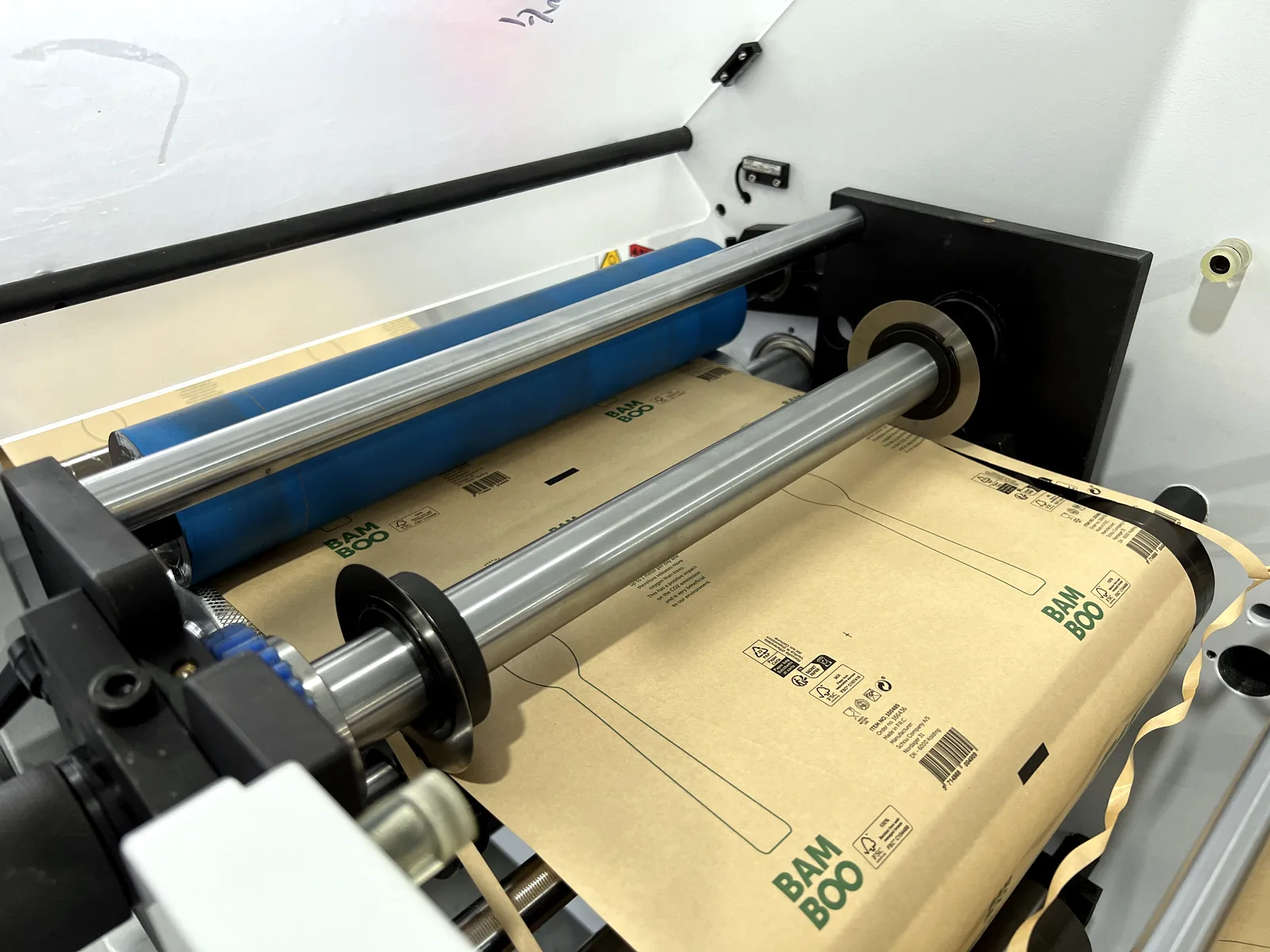
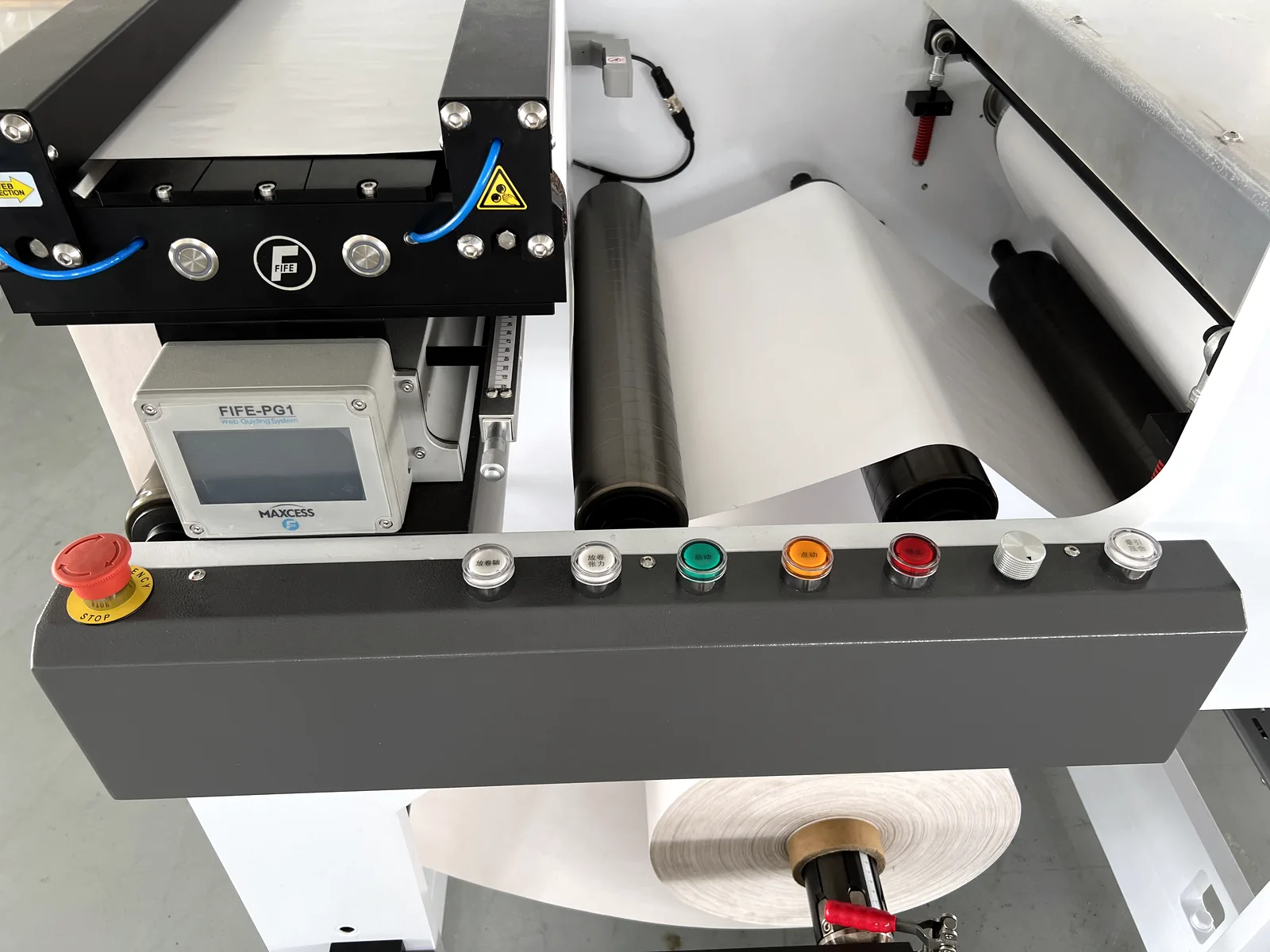
Sticker roll slitting also needs accurate web alignment. If the web moves left and right during running, the slitting position becomes unstable. A good web guiding system helps keep the material in the correct path before it reaches the slitting station.
In many factories, slitting is also the final quality control step. If operators need to check printing defects, missing labels, die cutting errors or roll contamination before rewinding, an inspection slitter rewinder may be more suitable than a basic slitting rewinding machine.
Key Buying Factors
1. Material Type
Different sticker label materials behave differently during slitting and rewinding. Paper labels, thermal paper, PET, PP, PVC, BOPP film and laminated label materials may require different blade choices, tension settings and web guiding sensitivity.
Paper materials are usually easier to slit, but dust and edge quality still matter. Film labels can be more sensitive to tension and static electricity. If the material has exposed glue near the edge, blade buildup can become a frequent problem.
2. Maximum Web Width
Maximum web width defines the widest roll the machine can process. Many sticker label and self-adhesive label applications use material widths commonly within 570mm, especially in narrow web label printing and roll label converting. However, this does not mean every factory should buy a 570mm machine. Some only need 370mm or 450mm, while others need wider future capacity.
Confirm maximum printed roll width, blank material width, future printing machine width, number of finished rolls per master roll and whether wider rolls may be produced in-house later.
3. Finished Roll Width
Finished roll width decides how narrow the machine must slit and how many knives are needed. Barcode labels and small sticker labels may require many narrow rolls. Packaging labels may use wider finished rolls. Check the minimum and common finished roll width, not only the maximum width.
4. Roll Diameter
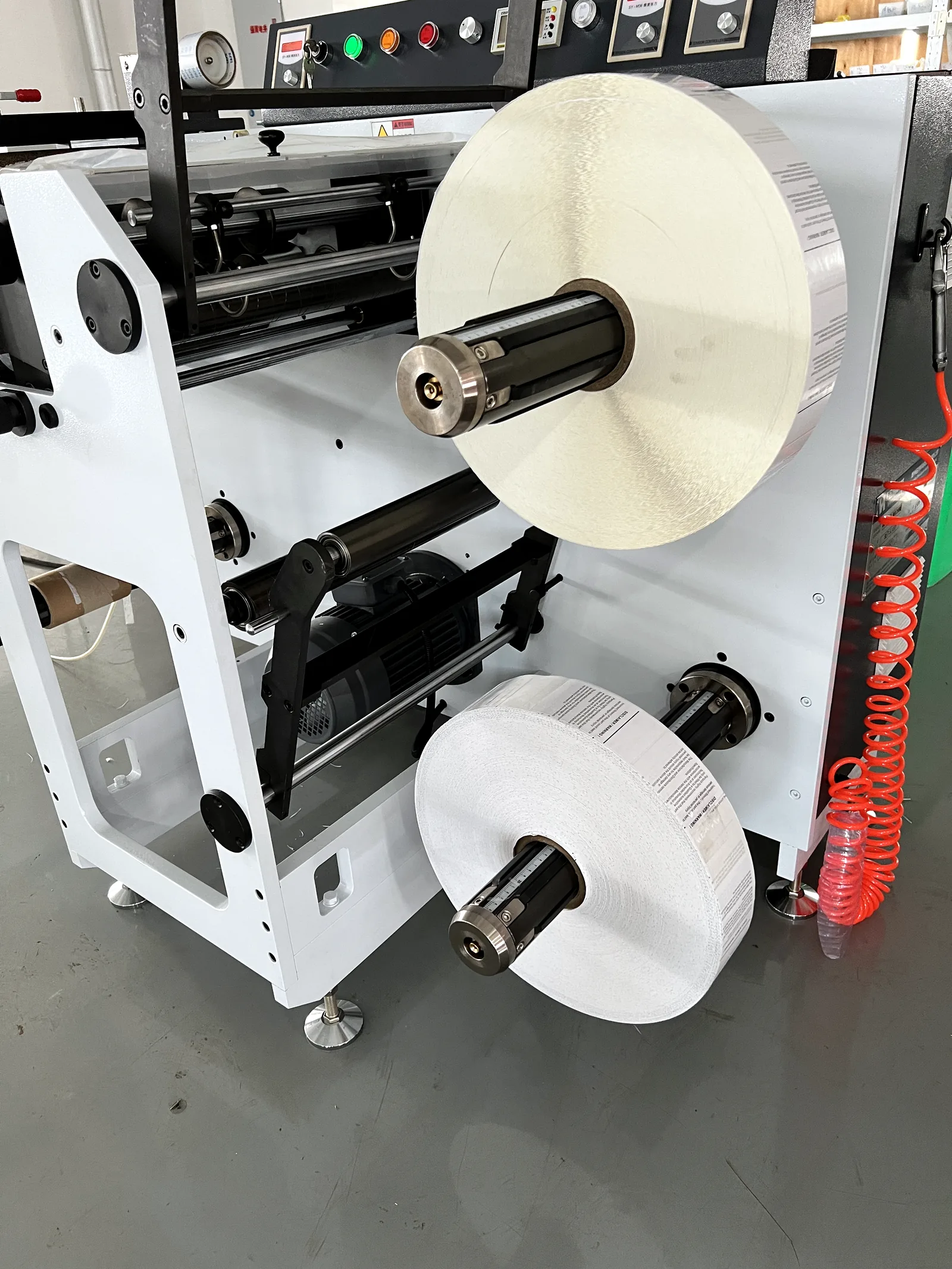
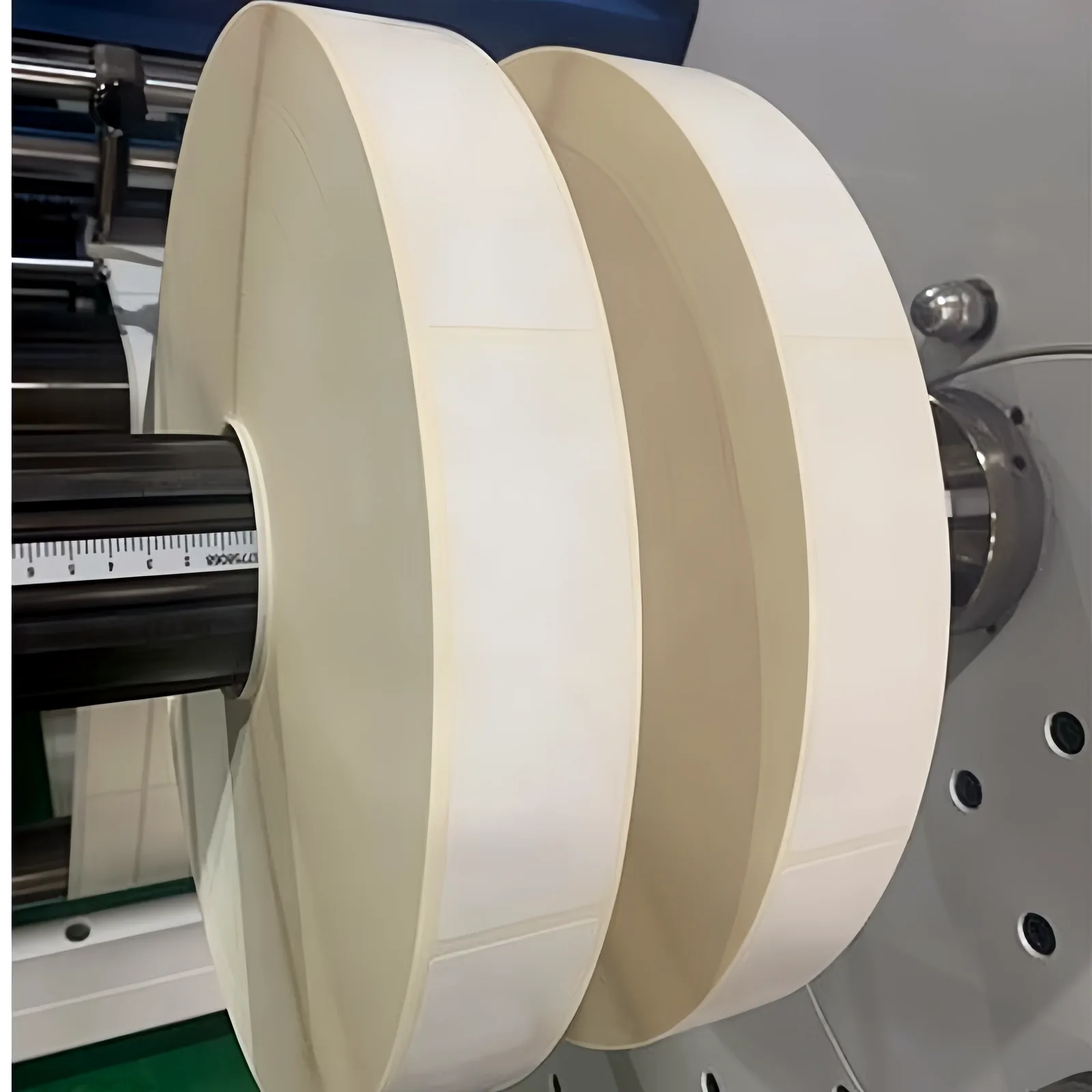
Roll diameter affects loading, tension stability, rewinding quality and productivity. Ask about maximum unwind diameter, maximum rewind diameter, normal customer roll diameter, roll changing method and whether finished rolls are used on desktop printers or automatic labeling machines.
5. Machine Speed
Speed is important, but it should not be the only buying factor. The practical running speed depends on material type, roll width, number of slitting lanes, inspection needs, operator skill and rewinding diameter. Ask for both maximum speed and realistic production speed for your material.
6. Slitting Accuracy
Slitting accuracy affects label edge quality and finished roll consistency. Poor accuracy may cause uneven roll widths, edge burrs, liner damage, label edge lifting or customer complaints during labeling.
7. Blade Type
Blade selection should match the material and edge quality requirement. Common options include rotary shear blades for many paper and label materials, razor blades for certain film or thin materials, adjustable knife holders and optional blade systems for special materials.
8. Tension Control
Tension control affects web stability, slitting accuracy and finished roll quality. If tension is too low, the web may wrinkle, move sideways or rewind loosely. If tension is too high, the material may stretch, curl or create roll deformation.
9. Web Guiding
Web guiding keeps the material aligned before slitting and rewinding. It is especially important for printed labels, barcode labels and narrow label rolls where edge position matters.
10. Rewinding Quality
Finished roll appearance is often how your customer judges production quality. Common rewinding problems include loose rolls, telescoping rolls, uneven roll sides, core slipping and edge damage. These may come from poor tension control, unsuitable core size, unstable web guiding, wrong rewinding direction or incorrect settings.
How material cost and waste affect slitting machine selection
Material cost is not only decided by the price of paper, thermal paper, PET, PP, BOPP film, adhesive or release liner. In real production, waste from rough slitting edges, adhesive buildup, web movement, unstable rewinding or rejected finished rolls can increase the actual cost of each order.
When comparing label slitting machines, check whether the machine can control web guiding, blade position, tension and finished roll hardness for your material. A stable slitting and rewinding process can reduce setup waste, edge defects and rework, especially for barcode labels, sticker rolls and packaging label production.
For a practical cost-factor checklist, see the label material cost reference before sending your material and roll data.
Common Buying Mistakes
- Choosing a machine only by maximum speed instead of realistic production stability.
- Ignoring finished roll width, core diameter, rewinding direction and customer roll diameter.
- Buying a basic slitter rewinder when the factory actually needs inspection before delivery.
- Selecting a machine that only fits today's smallest orders without considering wider future capacity.
Practical Checklist
- Material type: paper, PET, PP, PVC, BOPP, thermal paper or other
- Maximum web width and common material width
- Finished roll width range
- Maximum unwind diameter and required rewind diameter
- Core diameter and rewinding direction
- Required production speed and slitting accuracy
- Number of finished rolls per master roll
- Blade preference or material cutting difficulty
- Inspection requirement and web guiding requirement
- Roll edge quality requirement and future capacity plan
- Available factory space, power supply, sample roll photos or videos
Real Photos and Video Plan
FAQ
Is a label slitting machine the same as an inspection slitter rewinder?
Not always. A label slitting machine mainly focuses on cutting and rewinding rolls. An inspection slitter rewinder also gives the operator a place to inspect label quality during the process.
Is 570mm web width enough for sticker label production?
Many sticker label and self-adhesive label applications use material widths commonly within 570mm, but it depends on printer width, master roll size, finished roll layout and future orders.
What causes uneven slitting edges?
Uneven edges can be caused by dull blades, wrong blade type, unstable tension, material deviation, poor knife adjustment, adhesive buildup or unsuitable material handling.
Why do finished sticker rolls become loose or telescope?
Loose or telescoping rolls are often related to unstable tension, incorrect taper tension, wrong core size, poor rewinding alignment or inconsistent material thickness.
Should I choose rotary blades or razor blades?
Rotary blades are commonly used for many label materials. Razor blades may be useful for certain film materials or special slitting needs. The best choice depends on material thickness, adhesive behavior, edge quality requirement and production speed.
What should I send before requesting a quotation?
Send your material type, maximum web width, finished roll width, roll diameter, core diameter, required speed, sample photos, inspection needs and any running problems you want to solve.
Ask an Engineer
Need help choosing a label slitting machine?
Send us your material type, maximum web width, finished roll width, roll diameter, core diameter, required speed and sample photos. MWELLPACK can recommend a suitable slitting and rewinding machine configuration based on your real production requirements.