 Knowledge Center
Machine Guide
How to Choose a Label Inspection System
Match inspection capability to your real defect types, production speed and finished roll requirements instead of buying the most advanced camera on paper.
Quick Answer
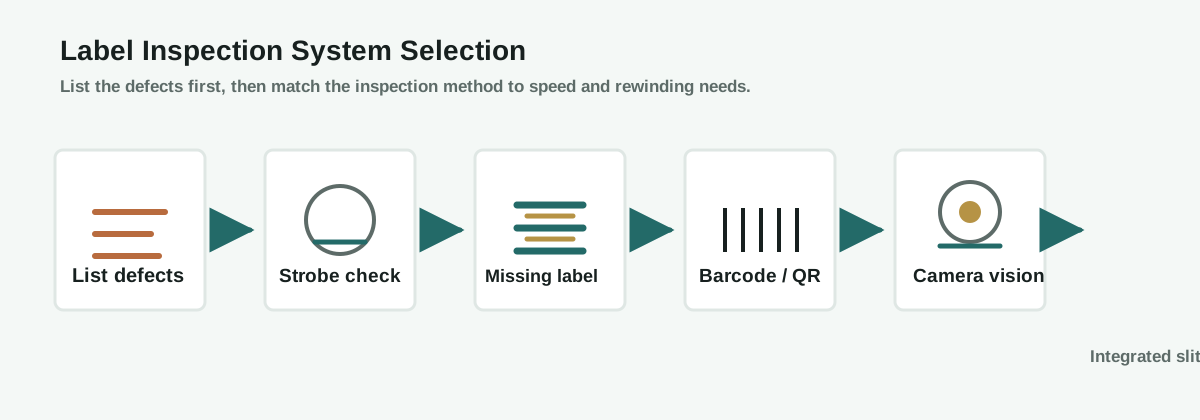
Choose a label inspection system by first listing the defects you must catch, the web width and speed you run, and how the inspection step connects to slitting and rewinding. Manual visual checking, strobe lights, missing label detection, barcode verification and camera vision each solve a different level of quality control, and the right choice depends on your label type, order volume and customer requirements.
For most label factories the practical question is not whether to inspect, but how much inspection the finished roll actually needs and whether the method can keep up with production speed without creating a bottleneck.
Why Inspection Matters in Roll Label Production
Printed label rolls can contain dirty printing, missing print, registration drift, scratches, wrinkles, splices or wrong data. If these defects reach a customer, the result is usually a rejected roll, a labeling line stoppage or a damaged customer relationship.
Inspection also affects roll quality itself. A roll that is slit and rewound without checking can hide telescoping, uneven tension, wrong lane counts or mixed splice positions. Inspection is the step that turns a printed mother roll into a customer-ready roll with a known quality level.
Inspection Methods Compared
Inspection methods are not mutually exclusive. Many machines combine strobe checking with missing label detection and barcode verification in one pass.
How to Choose Step by Step
1. List the defects you must catch
Start from the failures your customers would reject. A barcode label job needs code readability, while a cosmetic label job may need color and surface inspection. Writing down the defect list keeps you from overbuying.
2. Confirm web width and speed
The inspection method must work at your real production speed across the full web width. A camera that can only inspect part of the web, or a strobe that cannot sync at speed, will not provide the coverage you need.
3. Decide how defects are handled
Choose whether the system only flags defects, marks them with a flag or splice, stops the machine, or works with a rewinder that lets the operator remove bad sections. This determines the downstream rewinding setup.
4. Match the rewinding and slitting needs
Inspection is usually combined with slitting and rewinding on an inspection slitter rewinder. Confirm finished roll width, roll diameter, core size, counting and splice handling before finalizing the configuration.
Inspection System Selection Flow
Key Selection Factors
- Defect types: print defects, missing labels, code errors, splices, surface damage or dimensional issues.
- Web width: the inspection area must cover the full material width you process.
- Production speed: the method must keep up with printing and finishing speed without becoming a bottleneck.
- Roll diameter and core: confirm the machine supports your unwind and rewind roll sizes.
- Counting and splice handling: important for counted rolls and jobs with flagged or removed sections.
- Operator skill: camera systems need setup and a reference image, while strobe and sensor methods are simpler to run.
Common Defects a System Should Catch
- Missing or double labels
- Dirty or smeared print
- Registration drift between colors or between print and die cut
- Scratches and wrinkles on film or coated material
- Unreadable or wrong barcode and QR data
- Splices and flagged sections that must be removed
Buying Checklist
- Label material and surface: paper, film, thermal or laminated
- Defect types you must catch
- Maximum web width
- Real production speed
- Unwind and rewind roll diameter
- Core diameter and rewinding direction
- Need for counting, splice handling or marking
- Barcode or QR verification requirement
- Operator skill level and available training time
- Future job mix and capacity plan
FAQ
Do I need camera inspection or is strobe checking enough?
If you mainly catch visible repeat defects at moderate speed, strobe checking is often enough. If customers demand documented print quality or you run fast, high-value jobs, camera inspection is usually more suitable.
What is missing label detection used for?
It detects gaps, missing labels and double labels, which matters for counted rolls, blank labels and barcode label jobs where a skipped label causes downstream problems.
Can inspection be combined with slitting and rewinding?
Yes. Inspection slitter rewinders combine unwinding, inspection, web guiding, slitting and rewinding so the factory can check, convert and finish rolls in one pass.
What web width and speed should I confirm?
Confirm the maximum material width you process and the stable speed you actually run, because inspection coverage and sensor or camera response both depend on these values.
What information should I send before asking for a quotation?
Send material type, web width, production speed, roll diameter, core size, defect list and whether you need counting, splice handling or barcode verification.
Ask an Engineer
Not sure which inspection setup fits your label rolls?
Send us your material type, web width, production speed, roll diameter and the defects you must catch. MWELLPACK can recommend a practical inspection and rewinding configuration.
Related Articles
Related Machines
Inspection Slitter Rewinder
Combines inspection, web guiding, slitting and rewinding for finished label rolls.
View machine guideInkjet Machine for Labels
Prints variable data, barcodes and QR codes that inspection must verify.
View machine guideFlexo Printing Machine
Prints label rolls that are inspected and converted after printing.
View machine guide