 Knowledge Center
Product Knowledge
Inspection Slitter Rewinder Guide
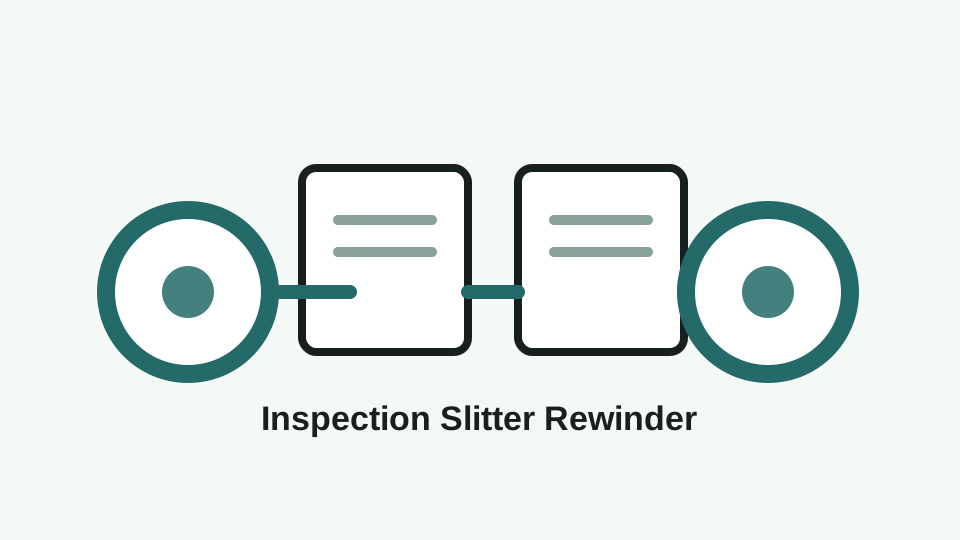
An inspection slitter rewinder is used after printing or die cutting to inspect defects, slit wide webs into narrow rolls, rewind finished rolls and prepare labels for packing or shipment.
What Is This Machine?
An inspection slitter rewinder is used after printing or die cutting to inspect defects, slit wide webs into narrow rolls, rewind finished rolls and prepare labels for packing or shipment. It is selected as part of a complete label making process, not as an isolated machine. Buyers should review the incoming material, roll size, desired finished roll format and quality control requirements before choosing a configuration.
How Does It Work?
The web is unwound under controlled tension, guided through the working stations and rewound after processing. Depending on the machine, the process may include printing, die cutting, lamination, inspection, slitting, waste removal, counting or automatic roll change. Stable tension and accurate web guiding are usually more important than catalogue speed.
When Do You Need This Machine?
You need a inspection slitter rewinder when your current workflow cannot reach the required roll quality, changeover speed, cutting accuracy or production volume. It is also useful when buyers request consistent roll diameter, clean edges, exact label count or better inspection records.
Is an Inspection Slitter Rewinder Suitable for Your Production?
You may need this machine if:
- You process printed label rolls after flexo printing, digital printing or other roll-to-roll printing processes.
- You need to inspect, slit and rewind label rolls before delivery.
- You make sticker labels, barcode labels, logistics labels, packaging labels or self-adhesive label rolls.
- Your current rewinding quality, roll edge or web alignment is unstable.
- You need better control of tension, web guiding and finished roll quality.
This machine may not be enough if:
- You also need to print labels from blank material.
- You need die cutting, waste matrix removal or laser cutting in the same process.
- You need continuous production with automatic roll change.
- You mainly produce sheet labels instead of roll labels.
What to confirm before choosing:
- Material type
- Maximum web width
- Roll diameter
- Finished roll width
- Core diameter
- Required speed
- Inspection requirement
- Slitting width
- Rewinding direction
- Future capacity plan
Practical Selection Table
| Question | Why it matters | What to check | Machine suggestion |
|---|---|---|---|
| What is your maximum web width? | The machine must support the widest roll material you process. | Measure the actual material roll width, not only the final label width. | Many sticker label, barcode label and self-adhesive label applications use web widths commonly within 570mm, but the machine should be selected according to actual material and future capacity. |
| What finished roll width do you need? | The slitting system must match the required narrow roll sizes. | Confirm final roll width, number of slitting lanes and core size. | Check blade type, slitting adjustment method and rewinding shaft configuration. |
| What roll diameter do you process? | Unwinding and rewinding diameter affect machine structure and production continuity. | Confirm maximum unwinding diameter and finished roll diameter. | Choose a machine with suitable unwinding, rewinding and tension control capacity. |
| Do you need inspection before rewinding? | Printed label rolls may need visual checking, defect removal or quality confirmation before delivery. | Confirm whether you need an inspection table, strobe light, camera inspection or manual checking. | Choose an inspection slitter rewinder instead of a basic slitter rewinder if inspection is part of the workflow. |
What is your maximum web width?
- Why it matters
- The machine must support the widest roll material you process.
- What to check
- Measure the actual material roll width, not only the final label width.
- Machine suggestion
- Many sticker label, barcode label and self-adhesive label applications use web widths commonly within 570mm, but the machine should be selected according to actual material and future capacity.
What finished roll width do you need?
- Why it matters
- The slitting system must match the required narrow roll sizes.
- What to check
- Confirm final roll width, number of slitting lanes and core size.
- Machine suggestion
- Check blade type, slitting adjustment method and rewinding shaft configuration.
What roll diameter do you process?
- Why it matters
- Unwinding and rewinding diameter affect machine structure and production continuity.
- What to check
- Confirm maximum unwinding diameter and finished roll diameter.
- Machine suggestion
- Choose a machine with suitable unwinding, rewinding and tension control capacity.
Do you need inspection before rewinding?
- Why it matters
- Printed label rolls may need visual checking, defect removal or quality confirmation before delivery.
- What to check
- Confirm whether you need an inspection table, strobe light, camera inspection or manual checking.
- Machine suggestion
- Choose an inspection slitter rewinder instead of a basic slitter rewinder if inspection is part of the workflow.
What Materials Can It Process?
Typical materials include self adhesive paper, PP, PE, PET, thermal paper, barcode stock, film labels and laminated label rolls. Always test real rolls when the material is very thin, stretchy, highly adhesive, static-sensitive or surface-treated.
Key Technical Points to Check Before Buying
- Web width range: confirm minimum and maximum roll width
- Slitting method: razor, shear or crush according to material
- Rewind diameter and shaft type: match customer roll requirements
- Inspection options: strobe, camera, splice table or missing label detection
- Tension control and web guiding: critical for narrow rolls and film materials
Common Machine Configurations
- Standard slitter rewinder
- Inspection table with splice platform
- Camera inspection system
- Turret rewinder option
- Counting and label gap detection
Technical Specifications
Typical Applications
- barcode label finishing
- packaging label roll conversion
- defect inspection after flexo printing
- narrow roll rewinding for distributors
Common Problems and Solutions
Common issues include web wandering, unstable tension, poor rewinding, inaccurate registration, adhesive buildup or waste matrix breaks. Most problems can be reduced by matching blade type, die cutting pressure, web guide position, tension range and roll hardness to the actual material.
FAQ
What information should I send before asking for a quote?
Send material type, thickness, roll width, maximum roll diameter, label size, production speed target and sample photos or videos.
Should I choose the fastest model?
Not always. Choose a machine that can run your material stably at the speed your operators can maintain with acceptable waste.
Send Your Material and Roll Data
Need help matching a machine to your label job?
Not sure whether an inspection slitter rewinder fits your label rolls? Send your material type, maximum web width, roll diameter, finished roll width, core size, speed target and current rewinding or slitting problem.
Related Articles
Related Machines
Digital Label Finishing Machine
Learn where this machine fits in label printing, die cutting or finishing workflows.
View machine guideRotary Die Cutting Machine
Learn where this machine fits in label printing, die cutting or finishing workflows.
View machine guideFlatbed Die Cutting Machine
Learn where this machine fits in label printing, die cutting or finishing workflows.
View machine guideLaser Die Cutter
Learn where this machine fits in label printing, die cutting or finishing workflows.
View machine guide