 Knowledge Center
Application Guide
Pharmaceutical Label Production Guide
Pharmaceutical labels need readable serialization, tamper-evident features and verified variable data, so printing and inspection must work together.
Quick Answer
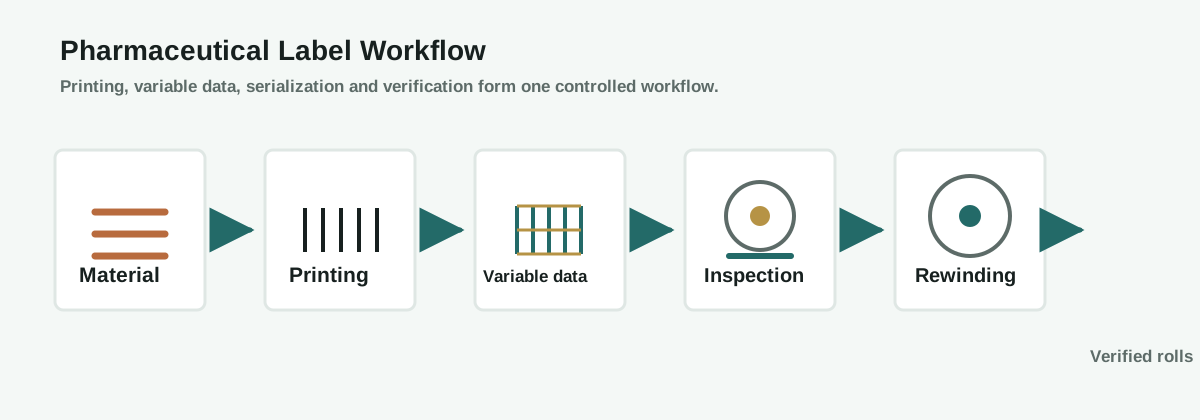
Pharmaceutical labels are produced with high-contrast printing, variable data such as batch numbers and 2D codes, tamper-evident features, and strict inspection and verification. The workflow must keep every code readable and traceable, which means printing, inspection and rewinding are tightly connected rather than separate steps.
Compared with a packaging label, a pharmaceutical label is driven by traceability and compliance. A missing or unreadable code, a wrong batch number or a damaged tamper feature can stop a production lot, so quality control is built into the converting line.
Materials for Pharmaceutical Labels
Pharmaceutical labels often use coated paper or film such as PP, PET and PE, chosen for print quality, durability and resistance to moisture, alcohol or handling. Some labels need tamper-evident constructions, security features or special adhesives for vials, bottles and cartons.
Confirm the material against the container and the storage conditions, because the label must stay readable and attached through the product's shelf life.
Printing and Variable Data
Flexo printing suits fixed label artwork and solid colors at volume. Inkjet printing suits the variable data that pharmaceutical labels depend on, including batch numbers, expiry dates, serial numbers and 2D codes that change for every label.
Whatever the method, the print must keep code contrast and quiet zones correct, because pharmaceutical codes are scanned and verified downstream.
Serialization and Inspection
Serialization gives every label a unique code. Inspection then verifies each code reads correctly, confirms the variable data matches, and detects missing, double or damaged labels. This is usually done on an inspection slitter rewinder with barcode or vision verification.
Missing label detection and counting also matter, because pharmaceutical rolls are often delivered with an exact label count and verified content.
Pharmaceutical Label Workflow
Machine Selection Checklist
- Material: coated paper or film, matched to container and storage
- Printing: flexo for fixed artwork, inkjet for variable data
- Serialization and 2D code requirement
- Inspection and verification of every code
- Missing label detection and counting
- Tamper-evident or security feature needs
- Finished roll diameter and core size for the customer's line
Common Problems and Fixes
FAQ
Why is serialization important for pharmaceutical labels?
Serialization gives each label a unique code for traceability and compliance, so every label must be verified readable and correct.
Should I use flexo or inkjet for pharma labels?
Flexo suits fixed artwork and solid colors at volume, while inkjet suits the variable batch, expiry and serial data that changes on every label.
How is inspection combined with printing?
Inspection is usually done on an inspection slitter rewinder that verifies codes, detects missing labels and rewinds verified rolls in one pass.
What roll format do pharma labels need?
Match the finished roll diameter and core size to the customer's labeling machine, and confirm the label count and winding direction.
What information should I send before asking for a quotation?
Send the material, container type, printing method, variable data and serialization needs, inspection requirement and roll specifications.
Ask an Engineer
Need a pharmaceutical label printing and inspection setup?
Send us your material, container type, variable data and serialization needs. MWELLPACK can recommend a practical production workflow.
Related Articles
Related Machines
Inkjet Machine for Labels
Prints variable batch, expiry and serial data for traceability.
View machine guideInspection Slitter Rewinder
Verifies codes, detects missing labels and rewinds verified rolls.
View machine guideFlexo Printing Machine
Prints fixed pharmaceutical label artwork at volume.
View machine guide