 Knowledge Center
Machine Guide
Barcode Label Printing and Finishing Guide
A complete workflow from barcode material and printing through inspection, slitting and rewinding, so codes stay readable and rolls run cleanly on scanning lines.
Quick Answer
A barcode label workflow starts with the right material, prints readable codes with flexo or inkjet, then inspects, slits and rewinds the roll so every label scans and the roll feeds smoothly on the customer's applicator or barcode printer.
Barcode labels fail in the field for two main reasons: unreadable codes and poorly wound rolls. Readability comes from print quality and contrast, while roll quality comes from slitting, tension control and rewinding. Both must be right for logistics, retail and warehouse use.
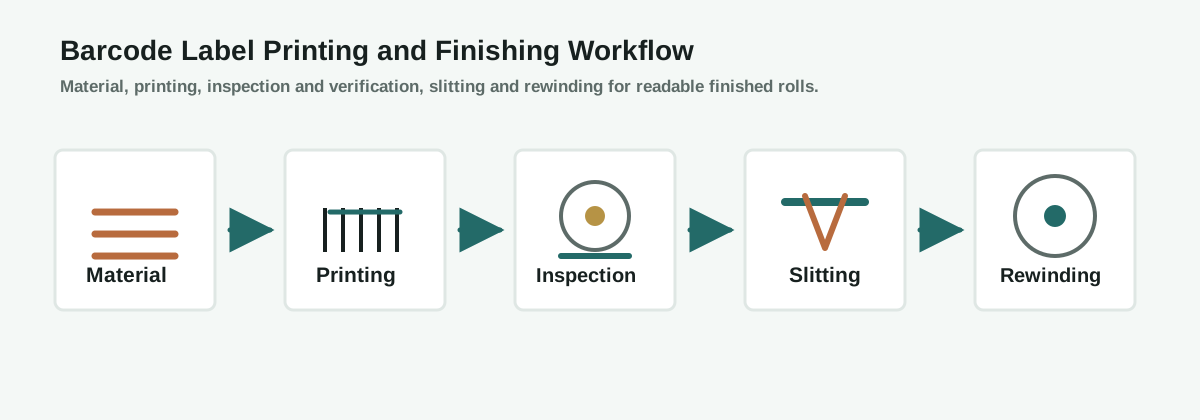
Step 1: Choose the Barcode Material
Barcode labels are usually printed on thermal paper, thermal transfer stock, coated paper or synthetic film. The material must match the printing method and the environment, because barcode readability depends on print contrast and how the label surface holds the code.
Confirm the adhesive and liner too, because they affect die cutting, matrix removal, slitting and how the label releases onto the product or package.
Step 2: Print the Barcode
Flexo printing suits fixed barcode designs at medium and high volume with solid, consistent color. Inkjet printing suits variable data such as serial numbers, batch codes and QR codes that change between labels or jobs.
Whatever the method, barcode contrast, quiet zones and exact bar width must be maintained. An inspection or verification step then confirms each code actually reads.
Step 3: Inspect and Verify
Barcode labels need more than visual checking. A barcode verifier reads the code and grades it, while missing label detection confirms gaps and counts. This is where the factory confirms no missing, double or unreadable labels reach the customer.
Inspection is usually combined with slitting and rewinding on an inspection slitter rewinder, so the roll is checked and converted in one pass.
Step 4: Slit and Rewind
The printed mother roll is slit into finished widths and rewound onto cores that match the customer's equipment. Clean slitting edges, stable tension and correct roll diameter keep the finished roll feeding smoothly without jams or wandering.
Barcode Printing and Finishing Workflow
Buying Checklist
- Barcode material and environment: thermal, paper or film
- Printing method: flexo for fixed codes, inkjet for variable data
- Barcode type and required grade
- Need for variable data, serial numbers or QR codes
- Inspection and verification requirement
- Maximum web width and finished roll width
- Rewind roll diameter and core size
- Required production speed
Common Problems and Fixes
FAQ
Should I print barcodes with flexo or inkjet?
Flexo suits fixed codes at medium and high volume, while inkjet suits variable data such as serial numbers and QR codes that change between labels.
Why is barcode verification important?
Verification reads and grades each code, confirming readability before shipment so unreadable labels do not reach the customer's scanning line.
Can inspection be combined with slitting and rewinding?
Yes. An inspection slitter rewinder checks, slits and rewinds barcode rolls in one pass, often with barcode verification and missing label detection.
What roll diameter should the finished barcode roll be?
Match the finished roll diameter and core size to the customer's applicator or barcode printer so the roll fits and feeds correctly.
What information should I send before asking for a quotation?
Send barcode type, material, printing method, variable data needs, web width, finished roll width, roll diameter and required speed.
Ask an Engineer
Need a complete barcode label printing and finishing setup?
Send us your barcode type, material, printing method, variable data needs and roll requirements. MWELLPACK can recommend a practical workflow.
Related Articles
Related Machines
Inkjet Machine for Labels
Prints variable barcode and QR data for short runs and traceability.
View machine guideInspection Slitter Rewinder
Inspects, verifies, slits and rewinds barcode rolls in one pass.
View machine guideFlexo Printing Machine
Prints fixed barcode designs at medium and high volume.
View machine guide