 Knowledge Center
Application Guide
Wine Label Production Guide
Wine and spirit labels combine premium film, foil and embossing with accurate registration and clean finishing for a high-end look.
Quick Answer
Wine and spirit labels are produced on premium film or coated paper, then finished with foil stamping, embossing, matte lamination or varnish. The workflow needs accurate registration between print and finish, and clean die cutting and rewinding so the label looks sharp and applies smoothly on the bottle.
Compared with a logistics label, a wine label is driven by appearance and premium feel. The material, finish and registration all have to be right, because a wrinkle, a misregistered foil or a rough edge is immediately visible on the shelf.
Materials for Wine Labels
Wine labels often use coated paper, textured paper or film such as PP and PET. Film resists moisture and condensation from cold bottles, while textured paper gives a premium feel. The adhesive must suit the bottle surface and hold through chilling and handling.
Confirm the material with real tests for condensation and the bottle surface, because the label must stay smooth and attached from bottling to the table.
Printing and Finishing
Flexo printing suits the solid colors, spot colors and metallic effects common in wine labels at medium and high volume. Digital printing suits short runs and seasonal or limited releases.
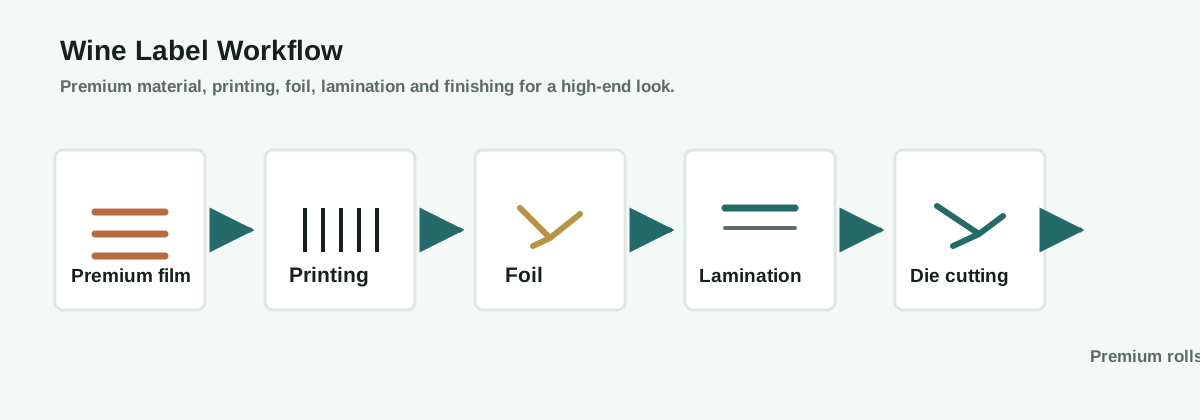
Finishing adds the premium look: foil stamping for metallic highlights, embossing for raised texture, and matte or gloss lamination or varnish to protect and set the finish. Registration between print and these finishing steps is the main quality risk.
Registration and Clean Finishing
Foil, embossing and lamination must register to the printed artwork, so servo registration and stable tension matter. After finishing, the label is die cut, slit and rewound, and clean edges and even tension keep the premium look intact.
Wine Label Workflow
Machine Selection Checklist
- Material: coated paper, textured paper or film for the bottle
- Printing: flexo for volume, digital for short and seasonal runs
- Foil stamping and embossing requirements
- Matte or gloss lamination and varnish
- Registration accuracy between print and finish
- Die cutting and clean matrix removal
- Finished roll diameter and core size
Common Problems and Fixes
FAQ
Should I use film or paper for wine labels?
Film resists moisture and condensation, while coated or textured paper gives a premium feel. Choose by the bottle surface and storage conditions.
Why is registration important for wine labels?
Foil, embossing and lamination must align with the printed artwork, and any misregistration is immediately visible on the finished label.
What finishing gives a premium look?
Foil stamping adds metallic highlights, embossing adds texture, and matte or gloss lamination protects and sets the finish.
Which printing method fits wine labels?
Flexo suits volume with spot and metallic colors, while digital suits short runs and seasonal releases.
What information should I send before asking for a quotation?
Send the material, bottle type, printing method, foil and embossing needs, lamination and the required roll specifications.
Ask an Engineer
Need a premium wine label production setup?
Send us your material, bottle type, printing method and finishing needs. MWELLPACK can recommend a practical production workflow.
Related Articles
Related Machines
Flexo Printing Machine
Prints wine labels with spot and metallic colors at volume.
View machine guideDigital Label Finishing Machine
Finishes labels with lamination, die cutting, slitting and rewinding.
View machine guideInspection Slitter Rewinder
Inspects and converts premium finished label rolls.
View machine guide