 Knowledge Center
Machine Guide
How to Choose a Label Lamination
Choose lamination by the finish you need, the protection the label faces and how the laminate bonds to the printed material.
Quick Answer
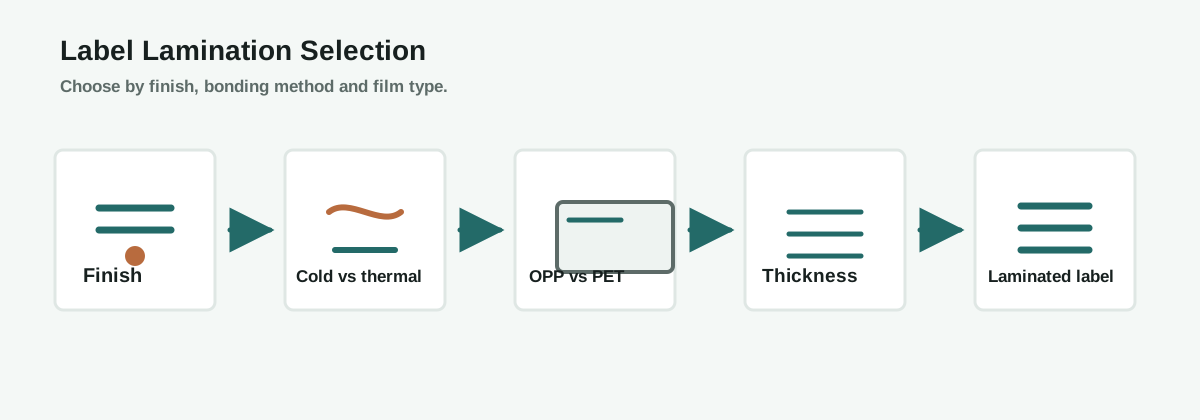
Choose a label lamination by the finish you want, gloss or matte, the protection the label needs against moisture and scuffing, and how the laminate bonds, cold pressure-sensitive or thermal. Also match the film type, OPP or PET, and the thickness to the label material and application.
Lamination covers the printed label with a clear film to protect it and change its finish. The right choice keeps the label looking good and surviving handling, while the wrong one wrinkles, curls or peels.
Gloss vs Matte
Gloss lamination makes colors look deeper and more vivid and adds a shiny finish. Matte lamination reduces glare, gives a soft premium feel and hides fingerprints and minor scratches better than gloss.
Choose gloss when the label needs vivid, eye-catching color, and matte when the label should look soft and premium or will be handled a lot.
Cold vs Thermal Lamination
Film Type and Thickness
OPP laminate is clear, stiff and economical, while PET laminate is stronger, more durable and resists tearing better. Thickness usually ranges from thin to heavy film, with heavier film giving more protection but more stiffness and curl risk.
Match the film type and thickness to the label use: a light OPP may be enough for a simple sticker, while a heavy PET suits a label that must survive moisture and handling.
Lamination Selection Flow
Buying Checklist
- Finish: gloss or matte
- Protection needed: moisture, scuffing or chemical resistance
- Bonding method: cold or thermal
- Film type: OPP or PET
- Film thickness and stiffness
- Label material and heat sensitivity
- Downstream die cutting and application
FAQ
Should I use gloss or matte lamination?
Gloss makes colors vivid and shiny, while matte gives a soft premium look and hides fingerprints better. Choose by the finish you want.
What is the difference between cold and thermal lamination?
Cold lamination uses pressure-sensitive film at room temperature, while thermal lamination uses heat to activate the adhesive for a stronger bond.
Should I use OPP or PET laminate?
OPP is economical and clear, while PET is stronger and more durable. Match the film to the protection the label needs.
Does thicker laminate protect better?
Yes, but it also adds stiffness and curl risk, so match the thickness to the label use and the downstream die cutting.
What information should I send before asking for a quotation?
Send the label material, finish you want, protection needs, bonding method and film type and thickness.
Ask an Engineer
Not sure which lamination fits your labels?
Send us your label material, finish and protection needs. MWELLPACK can recommend a practical lamination.
Related Articles
Related Machines
Digital Label Finishing Machine
Finishing workflow with lamination, die cutting, slitting and rewinding.
View machine guideFlexo Printing Machine
Prints labels with inline lamination and finishing options.
View machine guideInspection Slitter Rewinder
Inspects laminated rolls before slitting and rewinding.
View machine guide