 Knowledge Center
Machine Comparison
Shear vs Razor vs Crush Slitting
Shear slitting gives clean edges on film and paper, razor suits thin films, and crush slitting is low-cost but only for forgiving materials.
Quick Answer
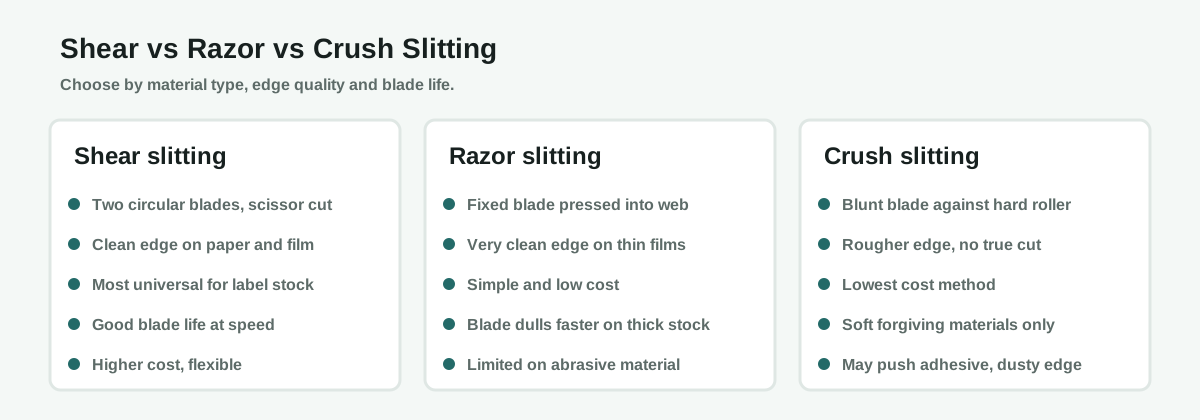
Shear slitting uses two overlapping circular blades like scissors to cut cleanly through paper and film, and is the most common choice for label materials. Razor slitting uses a fixed blade pressed into the moving web, which suits thin films. Crush slitting presses the web against a hard roller without a true cut, which is cheap but only works on soft, forgiving materials.
Choose by material type, required edge quality, blade life and running speed. Getting this wrong causes rough edges, dusty edges or blades that wear out too fast.
Shear Slitting
Shear slitting cuts with two circular blades, top and bottom, that overlap slightly like scissors. The web passes between them and is cut by the shearing action, giving a clean edge with good control.
It handles a wide range of label materials, including self-adhesive paper and film, and holds up well at production speed. Blade overlap and sharpness must be set correctly for the material.
Razor Slitting
Razor slitting presses a fixed razor blade into the moving web. It is simple and inexpensive, and gives a very clean edge on thin films where a shear blade might struggle.
It is less suitable for thick or abrasive materials, which dull the blade quickly, and the blade position must be held steady as the web moves.
Crush Slitting
Crush slitting presses the web against a hard roller with a blunt or flat blade, crushing and separating the material rather than truly cutting it. It is the lowest cost method but leaves a rougher edge.
It is mainly used on soft, forgiving materials where edge quality is not critical. For self-adhesive labels, crush slitting can push adhesive or create dusty edges, so it is less common for finished label rolls.
Shear vs Razor vs Crush Comparison
For self-adhesive label rolls, shear slitting is usually the default because it keeps edges clean and handles both paper and film without pushing adhesive.
Slitting Method Selection Flow
Key Buying Factors
- Material type: paper, film, thermal stock or laminated labels.
- Edge quality: clean edges matter for barcode and applicator-fed labels.
- Blade life: match blade type and sharpness to the material.
- Speed: confirm the method works at your stable production speed.
- Setup and changeover: check how blades are set and adjusted.
FAQ
Which slitting method is best for self-adhesive labels?
Shear slitting is usually best because it cuts paper and film cleanly without pushing adhesive or creating dusty edges.
When should I use razor slitting?
Razor slitting suits thin films where a shear blade might struggle, but it dulls quickly on thick or abrasive materials.
Why is my slitting edge rough or dusty?
Rough or dusty edges usually come from dull blades, wrong blade overlap or a slitting method that does not suit the material.
Does slitting method affect barcode readability?
Yes. A rough or dusty edge can interfere with feeding, while a clean edge keeps the label and code aligned.
What information should I send before asking for a quotation?
Send material type, web width, finished roll width, edge quality requirement and production speed.
Ask an Engineer
Not sure which slitting method fits your label material?
Send us your material type, web width, finished roll width and edge quality requirement. MWELLPACK can recommend the right slitting method.
Related Articles
Related Machines
Inspection Slitter Rewinder
Slits label rolls with the right blade method and controlled tension.
View machine guideDigital Label Finishing Machine
Finishes labels with slitting and rewinding in one workflow.
View machine guideRotary Die Cutting Machine
Die cuts and slits labels in roll-to-roll production.
View machine guide