 Knowledge Center
Machine Guide
Label Machine Tension Control Guide
Tension control keeps the web stable through printing, slitting, rewinding and die cutting, and it is usually the root cause when rolls wander, stretch or wind badly.
Quick Answer
Tension control keeps a consistent pull on the web so the material moves straight, prints and cuts in register, and winds into stable rolls. It matters in label printing, slitting, rewinding and die cutting because paper, film and thermal stock all stretch, shrink and react differently to tension.
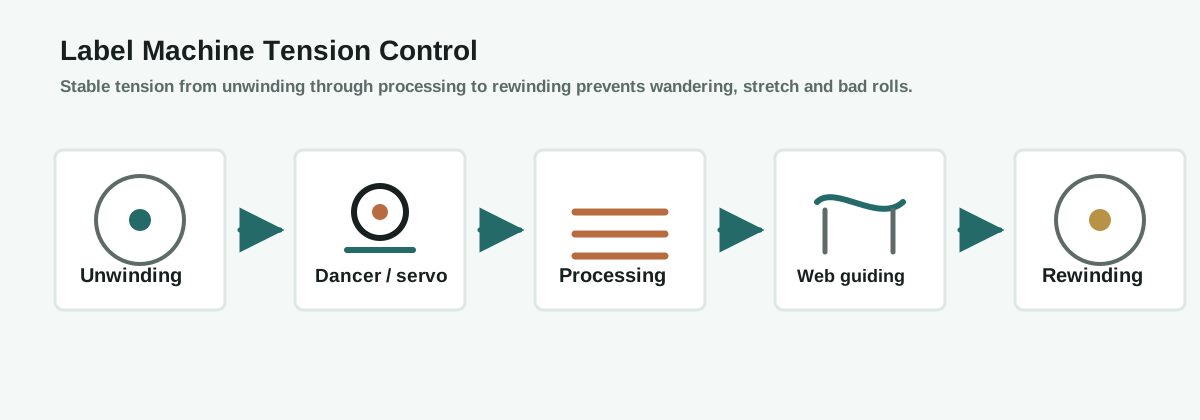
The main components are unwinding tension, processing tension, and rewinding tension, supported by dancer rollers, load cells or servo control, plus web guiding to keep the web centered. Most common material problems such as wandering, telescoping, loose rolls and registration drift trace back to tension.
Why Tension Control Matters
Too much tension stretches film and deforms the label, while too little tension lets the web wander and wind loosely. Tension that changes as a roll empties or fills causes the process to run differently from start to finish, so finished rolls come out inconsistent.
In die cutting, tension changes shift the cut position and cause registration drift. In slitting and rewinding, tension changes cause telescoping, loose rolls or hard, blocked rolls. Stable tension is the common requirement behind clean slitting, accurate die cutting and neat rewinding.
Tension Zones on a Label Machine
Tension Control Methods
- Dancer roller: a movable roller that absorbs web length changes and provides a mechanical reference; simple and robust.
- Load cell: measures actual web tension so the drive adjusts to keep tension constant; good for closed-loop control.
- Servo tension: servo motors control unwind, drive and rewind for fast, precise tension changes.
- Taper tension: reduces tension as roll diameter grows or shrinks so winding stays even from core to full roll.
- Web guiding: keeps the web centered so tension and slitting stay aligned across the width.
Tension Control Flow
Common Material Problems and Tension Causes
Buying Checklist
- Material type: paper, film, thermal or laminated
- Maximum web width and roll weight
- Unwind and rewind roll diameter
- Required production speed
- Tension method: dancer, load cell or servo
- Web guiding requirement
- Taper tension for rewind control
- Future material mix and capacity plan
FAQ
What is the difference between dancer and load cell tension?
A dancer roller provides a mechanical, positional reference for tension, while a load cell measures actual web tension for closed-loop control. Servo systems can combine both.
What is taper tension?
Taper tension reduces tension as the roll diameter changes, so the roll winds evenly from the core to full diameter without becoming too tight or too loose.
Why do film labels stretch during processing?
Film is more elastic than paper and stretches under high tension. Use lower tension and servo or dancer control tuned for film material.
Why do finished rolls telescope?
Telescoping usually comes from changing tension, web movement or uneven lane separation during rewinding.
What information should I send before asking for a quotation?
Send material type, web width, roll diameter, roll weight, required speed and whether you need servo tension or web guiding.
Ask an Engineer
Not sure which tension control setup fits your label production?
Send us your material type, web width, roll diameter, roll weight and required speed. MWELLPACK can recommend a practical tension control configuration.
Related Articles
Related Machines
Inspection Slitter Rewinder
Combines tension control, web guiding, slitting and rewinding for finished rolls.
View machine guideRotary Die Cutting Machine
Die cuts labels where tension stability keeps the cut in register.
View machine guideFlexo Printing Machine
Prints labels where tension keeps colors and register stable at speed.
View machine guide