 Knowledge Center
Technical Sharing
Rewinding Wrinkles and Uneven Tension
Wrinkles, telescoping and uneven roll tightness come from tension, trapped air and web alignment, and are fixed by controlling all three together.
Quick Answer
Rewinding wrinkles, telescoping and uneven roll tightness are caused by tension that is too high, too low or changing, by air trapped between layers, and by a web that is not centered. The fix is taper tension, controlled web guiding and a smooth winding path, with attention to how film and paper behave differently.
The Problem
A finished label roll can show wrinkles pressed into the label, a roll that telescopes sideways, or a roll that is soft in the middle and hard at the edge, or loose at the core and tight at the outside. These defects make the roll feed poorly on applicators and look defective to the customer.
Material Analysis
- Film elasticity: film stretches under tension and relaxes later, so wound-in tension can loosen the roll over time.
- Thickness variation: gauge bands in film build high spots that trap air and create wrinkles.
- Air entrapment: smooth film layers trap air, which slides and creates wrinkles unless removed.
- Paper vs film: paper absorbs some air and is less elastic, while film needs tighter control of tension and air.
Root-Cause Principle
Tension, air and alignment
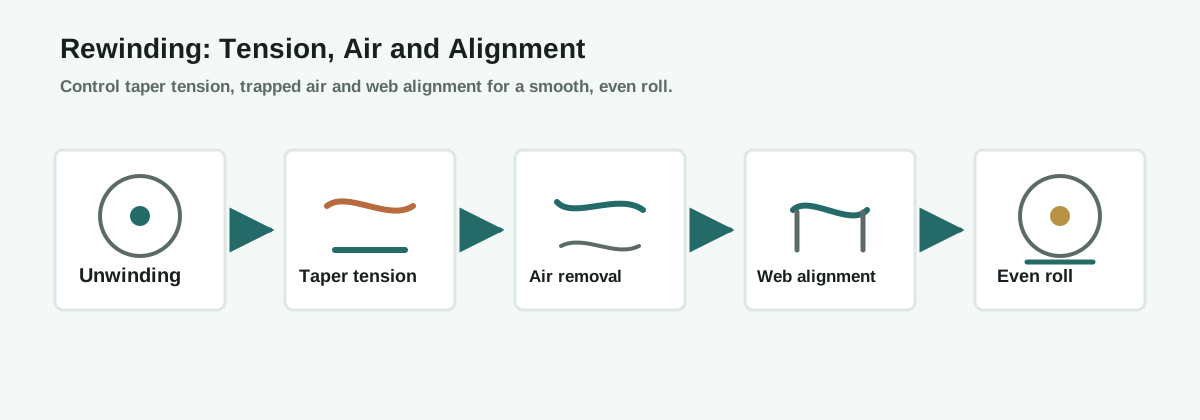
As a roll winds, tension must decrease with diameter so each new layer sits on the previous one without crushing or slipping. This taper tension keeps the roll even from core to full diameter. If tension stays constant, the outer layers crush the inner ones and the roll becomes too tight at the edge.
Trapped air between smooth film layers acts as a lubricant, letting layers slide sideways and form wrinkles or telescoping. A web that enters the winder off-center concentrates tension on one edge, which also causes telescoping and uneven hardness.
How to Diagnose
- Check whether the defect is wrinkles (air or tension), telescoping (alignment or taper) or uneven hardness (taper).
- Compare the roll from core to outside for changing tightness.
- Watch the web for sideways movement at the winder.
- Test a lower speed to separate speed-related air entrapment from setup issues.
Rewinding Mechanism
Solutions
Film and paper need different tension profiles. A setup tuned for paper often winds film too tight or too loose, so record settings per material.
Prevention Checklist
- Record taper tension settings per material
- Keep web guiding centered before the winder
- Use a spreader roller to remove air
- Confirm air shaft grip and core alignment
- Run at the fastest speed that keeps rolls even
FAQ
What causes wrinkles in a rewound roll?
Wrinkles usually come from trapped air or uneven tension, where layers slide and fold instead of lying flat.
Why does a roll telescope?
Telescoping comes from the web entering the winder off-center or from changing tension, which lets layers shift sideways.
What is taper tension?
Taper tension reduces tension as the roll diameter grows, keeping the roll even from the core to full diameter.
Why does film wind differently from paper?
Film is elastic and traps air, so it needs lower, better-controlled tension and air removal, while paper is more forgiving.
What information should I send before asking for help?
Send the material, web width, roll diameter, winding tension settings and whether the defect is wrinkles, telescoping or uneven hardness.
Ask an Engineer
Still getting wrinkled or uneven rewound rolls?
Send us your material, web width, roll diameter and tension settings. MWELLPACK can help you tune the winding for smooth, even rolls.
Related Articles
Related Machines
Inspection Slitter Rewinder
Rewinds label rolls with taper tension and web guiding.
View machine guideAutomatic Roll Change Machine
Keeps roll-to-roll lines running with controlled tension.
View machine guideDigital Label Finishing Machine
Finishes labels with slitting and rewinding in one workflow.
View machine guide