 Knowledge Center
Machine Guide
How to Choose a Label Rewinding Machine
Match the winding method, tension control and finished roll limits to how your customer actually uses the roll, not just the machine name.
Quick Answer
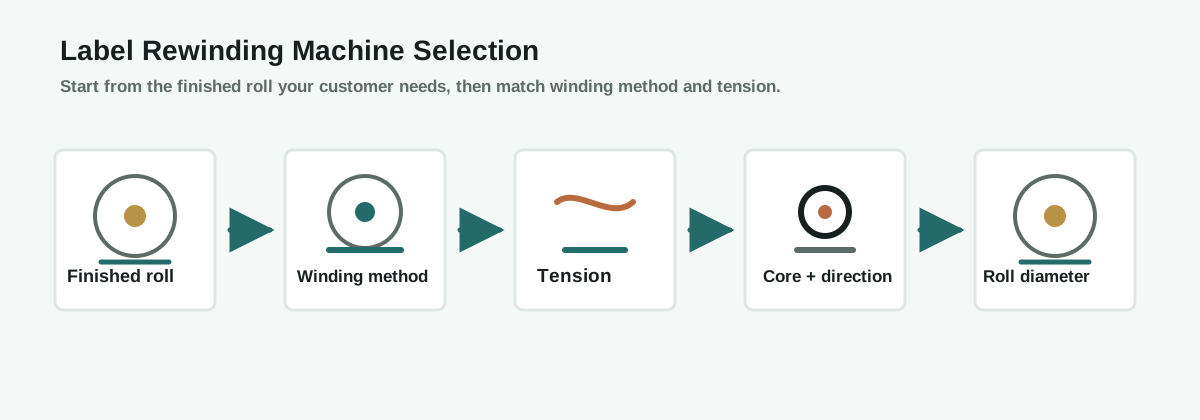
Choose a label rewinding machine by first defining the finished roll your customer needs: roll diameter, core size, winding direction and how tight and neat the roll must be. Then match a winding method, center, surface or turret, and confirm tension control so every roll winds the same way from core to full diameter.
A rewinding machine converts a printed or blank mother roll into customer-ready finished rolls. The key decisions are winding method, tension control, roll diameter and core size, and whether you also need inspection or slitting in the same pass.
Rewinder vs Slitter Rewinder
A simple rewinder only winds material from one roll to another without changing width. A slitter rewinder also cuts the web into narrower lanes before rewinding, and an inspection slitter rewinder adds inspection, web guiding and defect handling.
If you only need to rewind and check roll quality, a rewinder may be enough. If you must slit lanes or inspect printed labels, choose an inspection slitter rewinder instead.
Winding Methods
Key Selection Factors
- Winding method: center, surface or turret, matched to material and speed.
- Tension control: constant or taper tension keeps the roll firm and even.
- Finished roll diameter: must fit the customer's applicator or printer.
- Core size: common sizes include 25 mm, 40 mm, 50 mm, 76 mm and 3 inch.
- Winding direction: face-in or face-out, matched to how the customer unwinds.
- Roll hardness: confirm the roll is not too loose or too tight for downstream equipment.
Rewinding Machine Selection Flow
Buying Checklist
- Material type: paper, film or thermal stock
- Maximum web width
- Unwind and rewind roll diameter
- Core diameter and winding direction
- Required production speed
- Winding method and tension control
- Need for slitting or inspection in the same pass
- Future capacity plan
FAQ
Do I need a rewinder or a slitter rewinder?
If you only rewind without changing width, a rewinder may be enough. If you must slit lanes or inspect printed labels, choose a slitter rewinder or inspection slitter rewinder.
What is the difference between center and surface winding?
Center winding drives the core directly, while surface winding drives the outside of the roll with a roller. Each suits different materials and speed ranges.
What is taper tension?
Taper tension reduces tension as the roll diameter grows, so the roll stays even from the core to full diameter instead of becoming too tight.
Why does winding direction matter?
The customer unwinds the roll in a specific direction, face-in or face-out. The finished roll must match their applicator or printer.
What information should I send before asking for a quotation?
Send material type, web width, unwind and rewind roll diameter, core size, winding direction, required speed and whether you need slitting or inspection.
Ask an Engineer
Not sure which rewinding machine fits your finished roll requirements?
Send us your material type, web width, roll diameter, core size, winding direction and required speed. MWELLPACK can recommend a practical rewinding configuration.
Related Articles
Related Machines
Inspection Slitter Rewinder
Inspects, slits and rewinds label rolls with controlled tension.
View machine guideAutomatic Roll Change Machine
Keeps roll-to-roll lines running by splicing and changing rolls without stopping.
View machine guideDigital Label Finishing Machine
Finishes labels with die cutting, slitting and rewinding in one workflow.
View machine guide