 Knowledge Center
Technical Sharing
Slitting Burrs and Adhesive Buildup
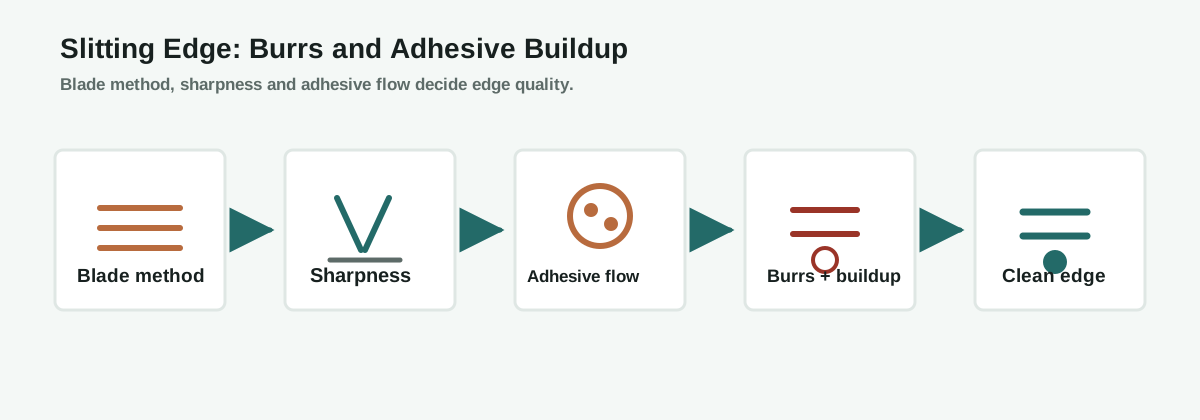
Burrs, dusty edges and adhesive buildup on slitting blades come from the blade method, blade condition and how the adhesive flows under pressure.
Quick Answer
Slitting burrs and dusty edges come from using the wrong blade method, a dull blade or an incorrect blade overlap for the material. Adhesive buildup on the blade comes from the adhesive flowing and transferring to the blade under pressure, made worse by heat and speed. The fix is matching the blade method to the material, keeping blades sharp and clean, and controlling speed and cooling.
The Problem
Finished label rolls can show rough or hairy edges, small dust particles on the roll face, or adhesive that collects on the blades and then smears onto the roll or tears the edge. These defects cause feeding problems on applicators and barcode printers and make the roll look low quality.
Material Analysis
- Adhesive cold flow: pressure-sensitive adhesive is a soft viscoelastic layer that flows and transfers to the blade under cutting pressure.
- Film vs paper: film stretches and can leave a stretched edge, while paper can dust when cut with the wrong method.
- Liner and face thickness: thicker stacks need more cutting force, which changes blade wear and adhesive transfer.
- Heat from friction: higher speed heats the blade and softens the adhesive, increasing buildup.
Root-Cause Principle
Blade method and adhesive flow
Shear slitting cuts with two overlapping circular blades like scissors and gives a clean edge with less adhesive transfer. Razor slitting presses a fixed blade into the moving web and is clean on thin films but collects adhesive quickly. Crush slitting presses and separates rather than cutting, which pushes adhesive and creates dust.
As the blade cuts through the adhesive layer, pressure squeezes the adhesive and heat softens it, so it flows onto the blade. Once buildup starts, it drags across the cut edge and creates burrs, smears and edge tearing.
How to Diagnose
- Check the blade method against the material: shear for most labels, razor for thin films, avoid crush for adhesive stock.
- Inspect blade sharpness and overlap or penetration.
- Look for adhesive transfer on the blade faces after a short run.
- Compare edge quality at low and high speed to find heat-related buildup.
Slitting Edge Mechanism
Solutions
Adhesive buildup is a loop: buildup drags, drag heats the edge, heat softens more adhesive. Breaking the loop with a sharp, correctly set blade is usually more effective than cleaning alone.
Prevention Checklist
- Match blade method to material before the run
- Track blade sharpness and replace on schedule
- Run at the fastest speed that keeps a clean edge
- Inspect blades for adhesive after each run
- Confirm blade overlap or penetration per material
FAQ
Why does adhesive build up on the slitting blade?
Cutting pressure squeezes the soft adhesive and friction heat softens it further, so it flows onto the blade. Once buildup starts it drags and creates burrs.
Which blade method should I use for label stock?
Shear slitting suits most label stock. Razor suits thin films, and crush slitting should be avoided for adhesive labels because it pushes adhesive.
Does speed affect adhesive buildup?
Yes. Higher speed increases friction heat, which softens the adhesive and increases transfer to the blade.
Do ceramic or carbide blades help?
They wear more slowly and can reduce adhesive pickup, but the blade method and overlap must still be correct for the material.
What information should I send before asking for help?
Send the material, blade method, blade material, speed, and whether the defect is burrs, dust or adhesive buildup.
Ask an Engineer
Still getting burrs or adhesive buildup on your slitting blades?
Send us your material, blade method, blade material and speed. MWELLPACK can help you get a clean, stable slitting edge.
Related Articles
Related Machines
Inspection Slitter Rewinder
Slits label rolls with the right blade method and controlled tension.
View machine guideDigital Label Finishing Machine
Finishes labels with slitting and rewinding in one workflow.
View machine guideRotary Die Cutting Machine
Die cuts and slits labels in roll-to-roll production.
View machine guide